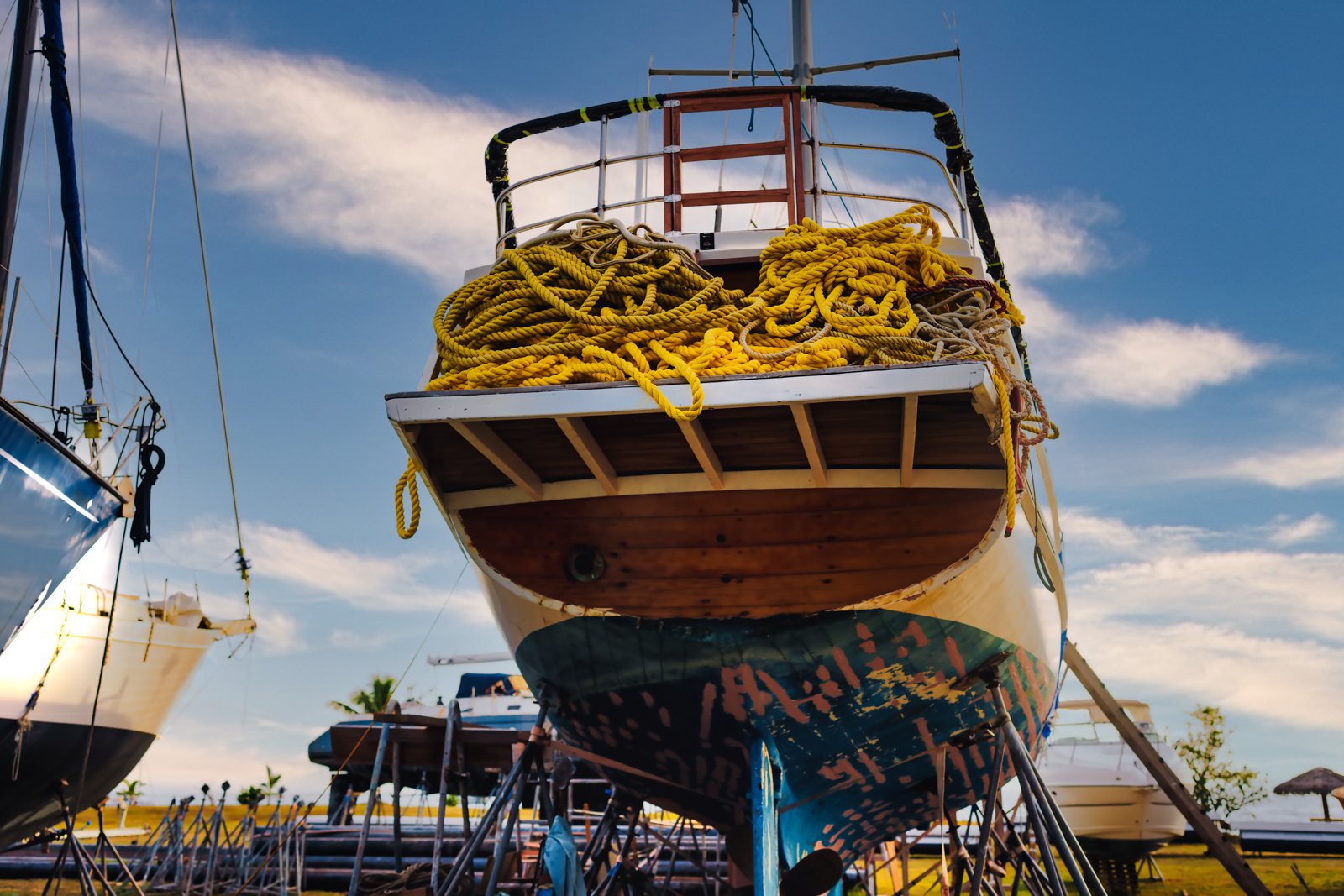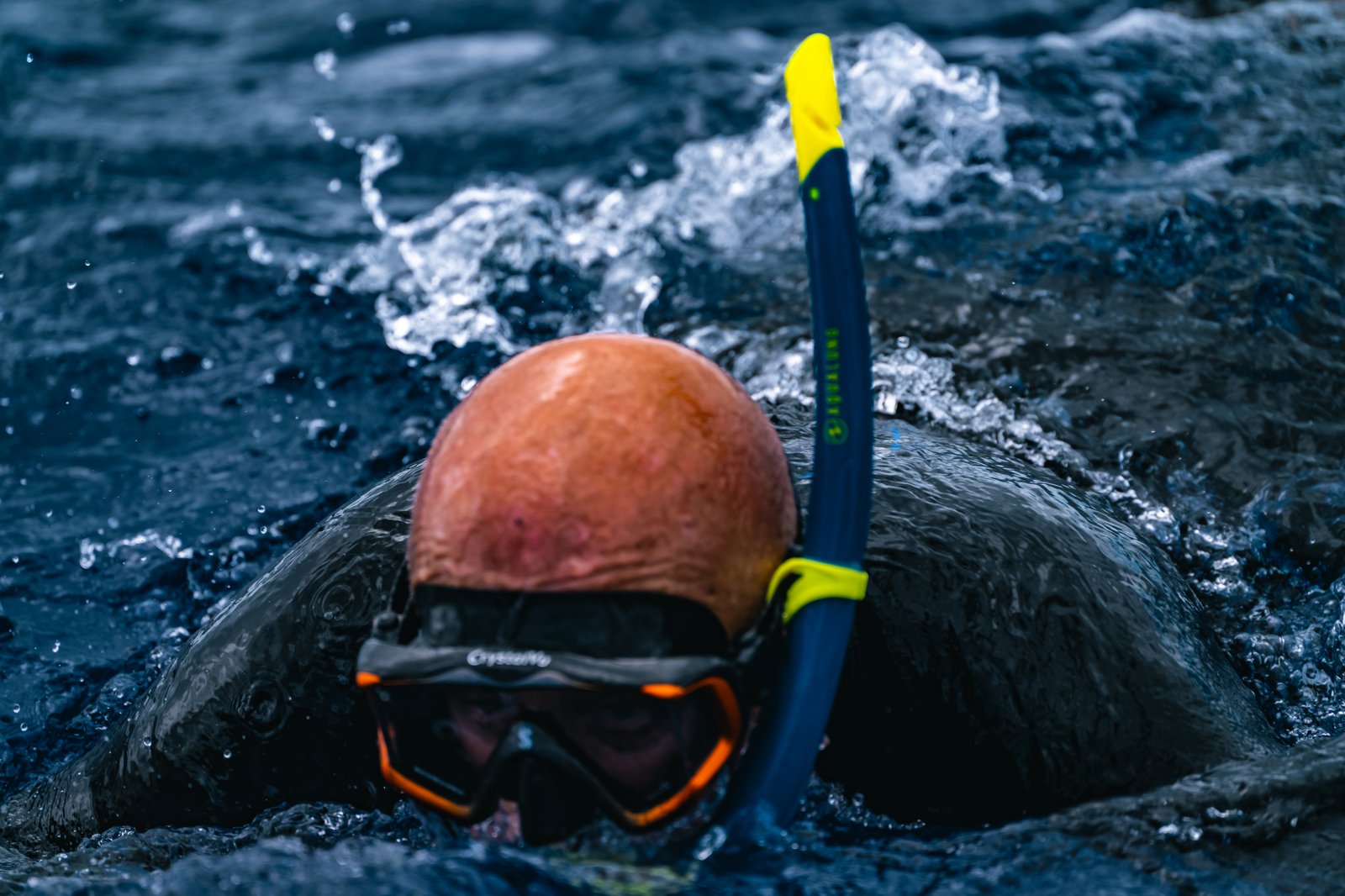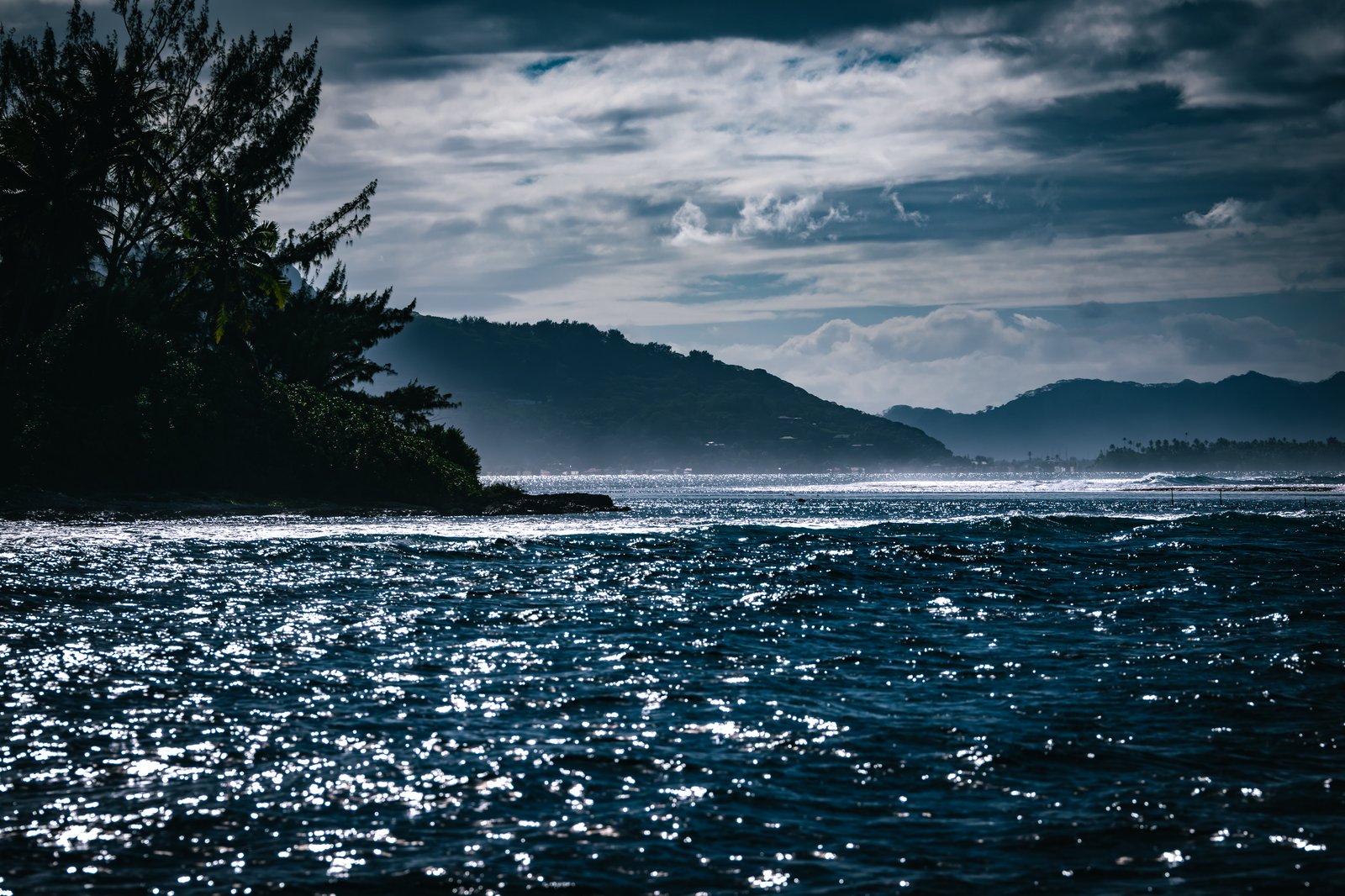
The Gambier keep handing us small islands to get lost on, and this week it was Mekiro and Akamaru. I met the two friends I have been sailing with in a pub in Brest, on the far side of the world, where I looked at the pair of them and said I did not know them but I thought I wanted to go wherever they were going. Five thousand nautical miles later the arithmetic still holds. There have been belly laughs and a fair number of mornings spent regretting the night before, and somewhere in the middle of it the three of us became something close to brothers.
On the shore of Mekiro we met a fourth. His name was Billie, and it did not occur to any of us at first that Billie was a goat. He took to one of my friends straight away, the way some animals decide a thing and simply commit to it, and led him off on a tour of the island while I got the drone up. By the time I caught the two of them they had an understanding. We spent the day hiking Mekiro together, all four, and it was a good day, the kind you do not narrate while it is happening because you are too busy being inside it.
Every sailor knows there is a time to say goodbye. The friends we make out here last forever, but the goodbyes themselves are usually short and well practiced, because we get so much practice. Billie had not read that part. He took our leaving harder than we expected, genuinely surprised the plan had ever included departure. We anchored off afterward and sat with a couple on a catboat, locals of seven years, who walked us through the pearls and the farmers and the long quiet history of this corner of the lagoon.
Akamaru itself is a small place with an enormous church. Notre-Dame-de-la-Paix, Our Lady of Peace, went up in 1834, and for a stretch of the nineteenth century this handful of acres was one of the most important religious centers in all of Polynesia. The history underneath it is not simple. The missionaries brought literacy and stone and new trade, and in the same breath they burned the marae and the carved idols and put their own faith where the old Mangarevan religion had been. Disease and forced labor and upheaval did the rest, and the population fell away. Today a few dozen people live here, and visitors almost always reach for the same word, peaceful, with the church standing white and improbable at the center of it. We left it there and pointed the bow back out.
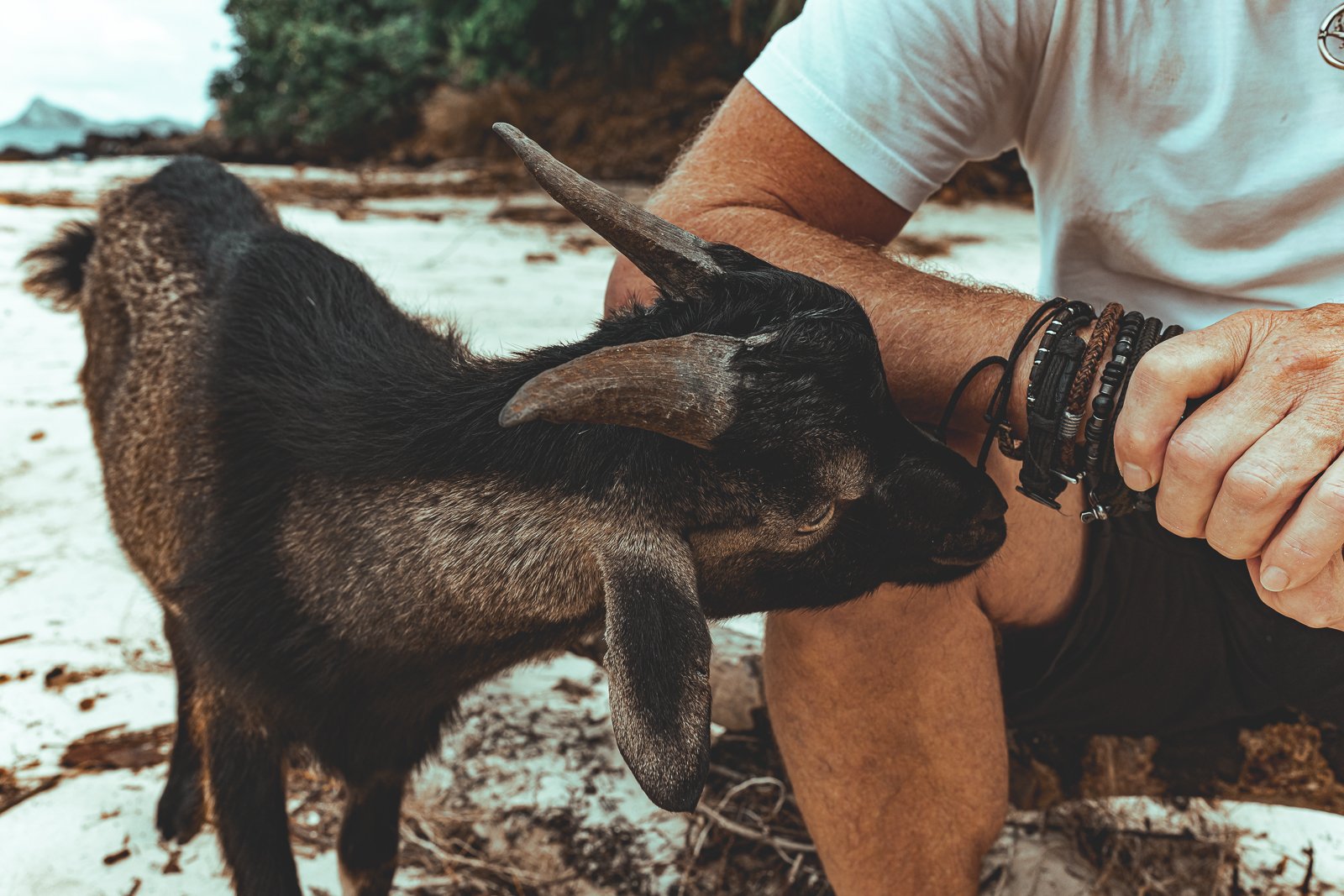
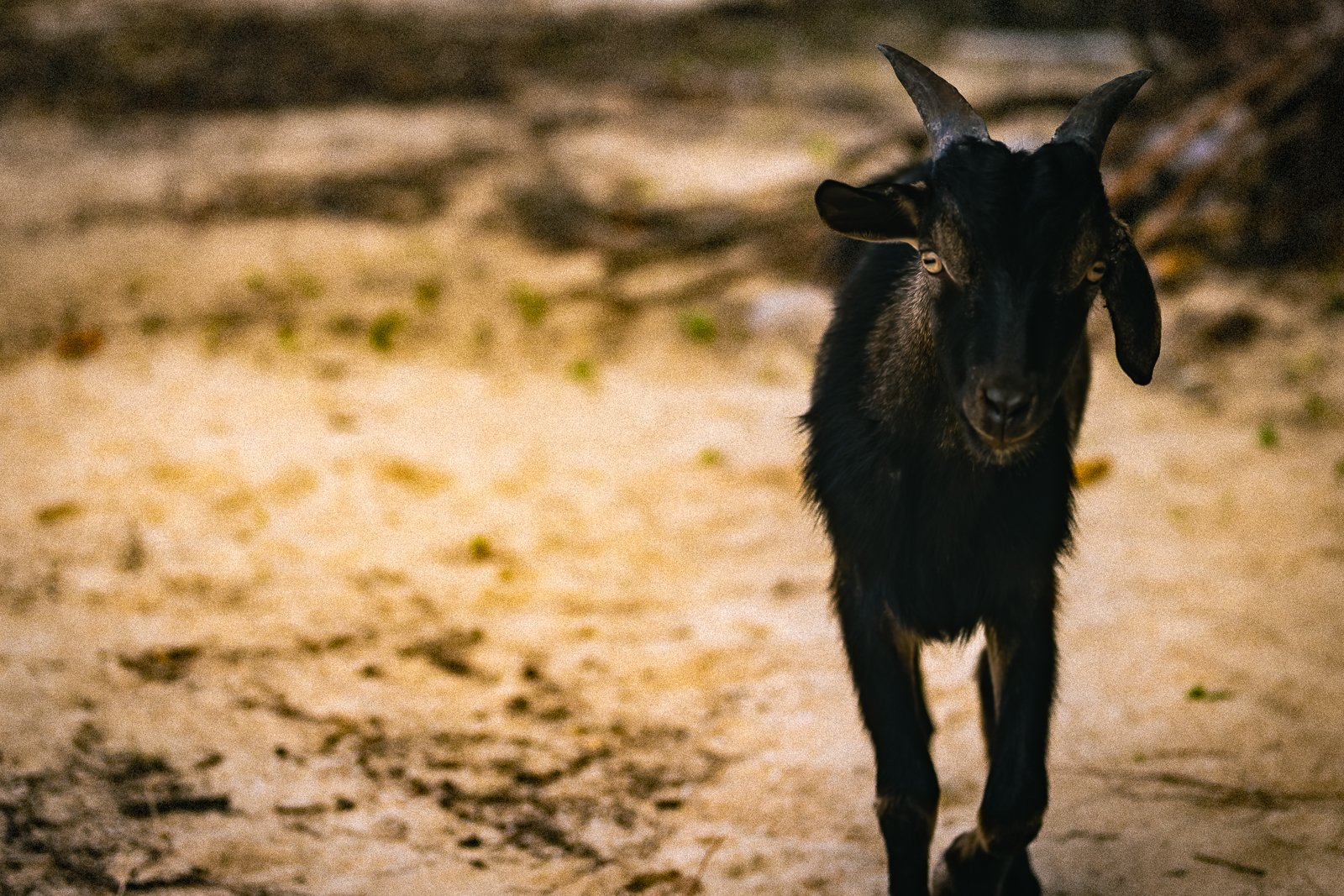
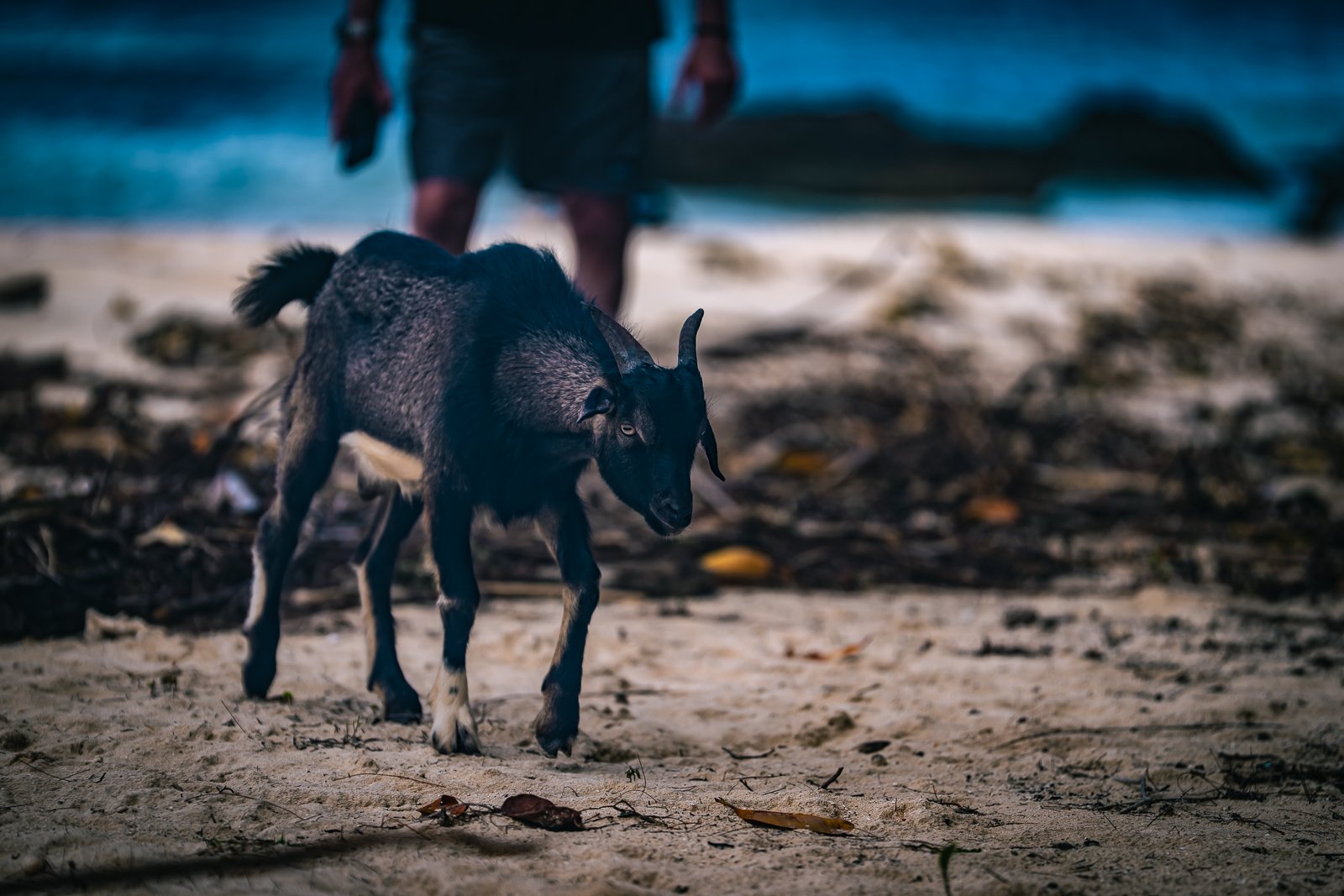
Left: Billie, making the introductions official. Right, top: he had a way of walking straight up to you, as if you were running late. Right, bottom: four legs and one strong opinion about who his people were.
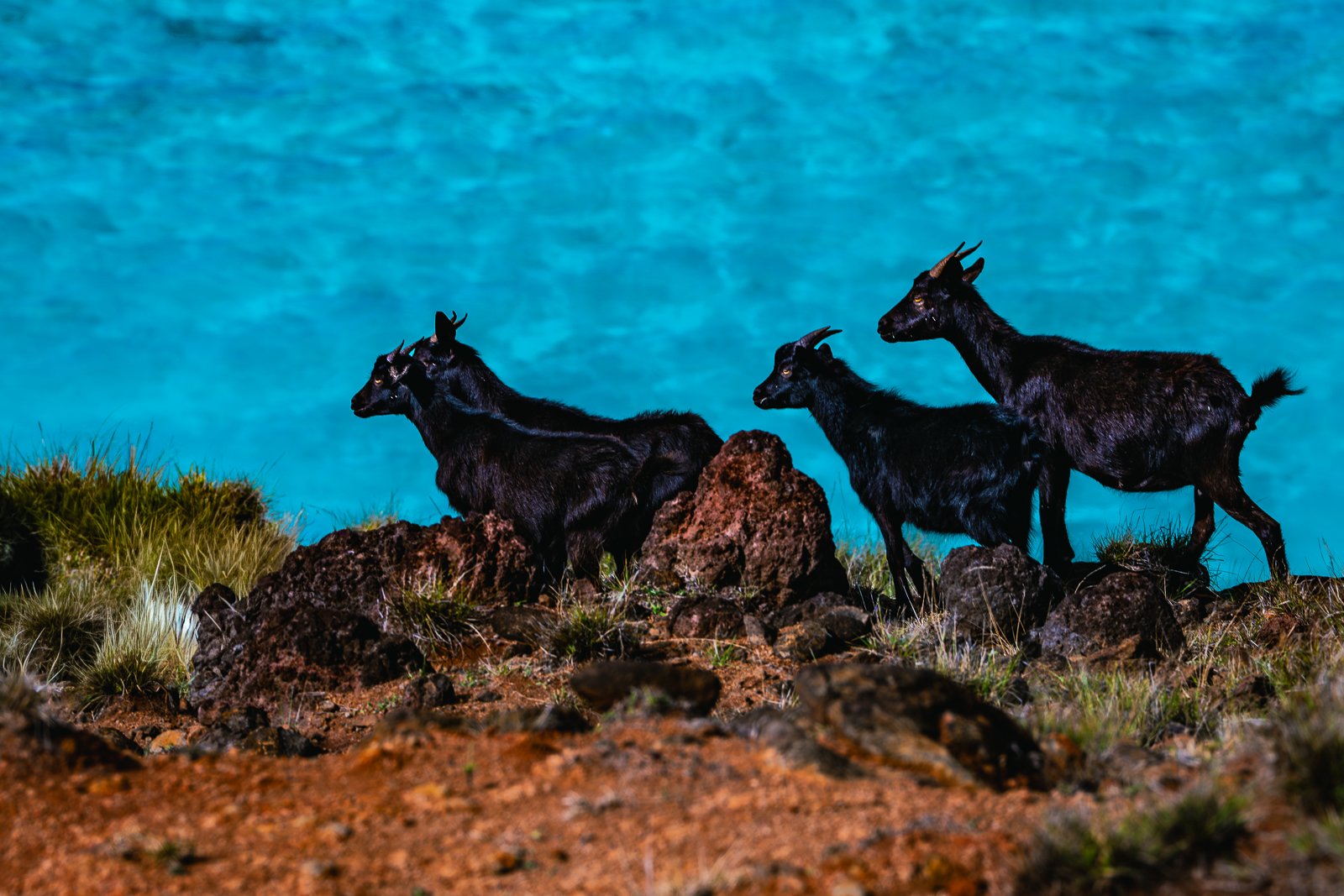
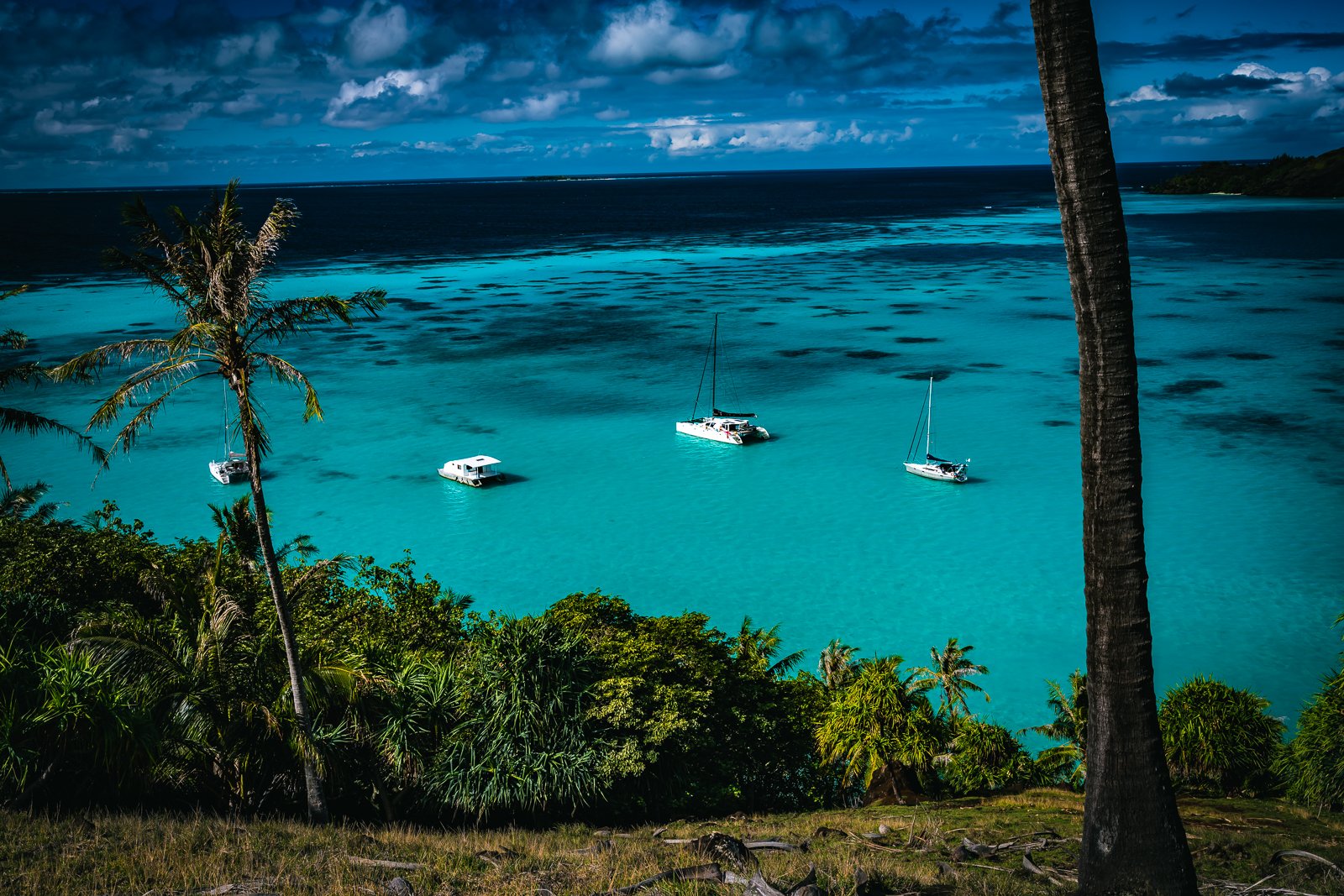
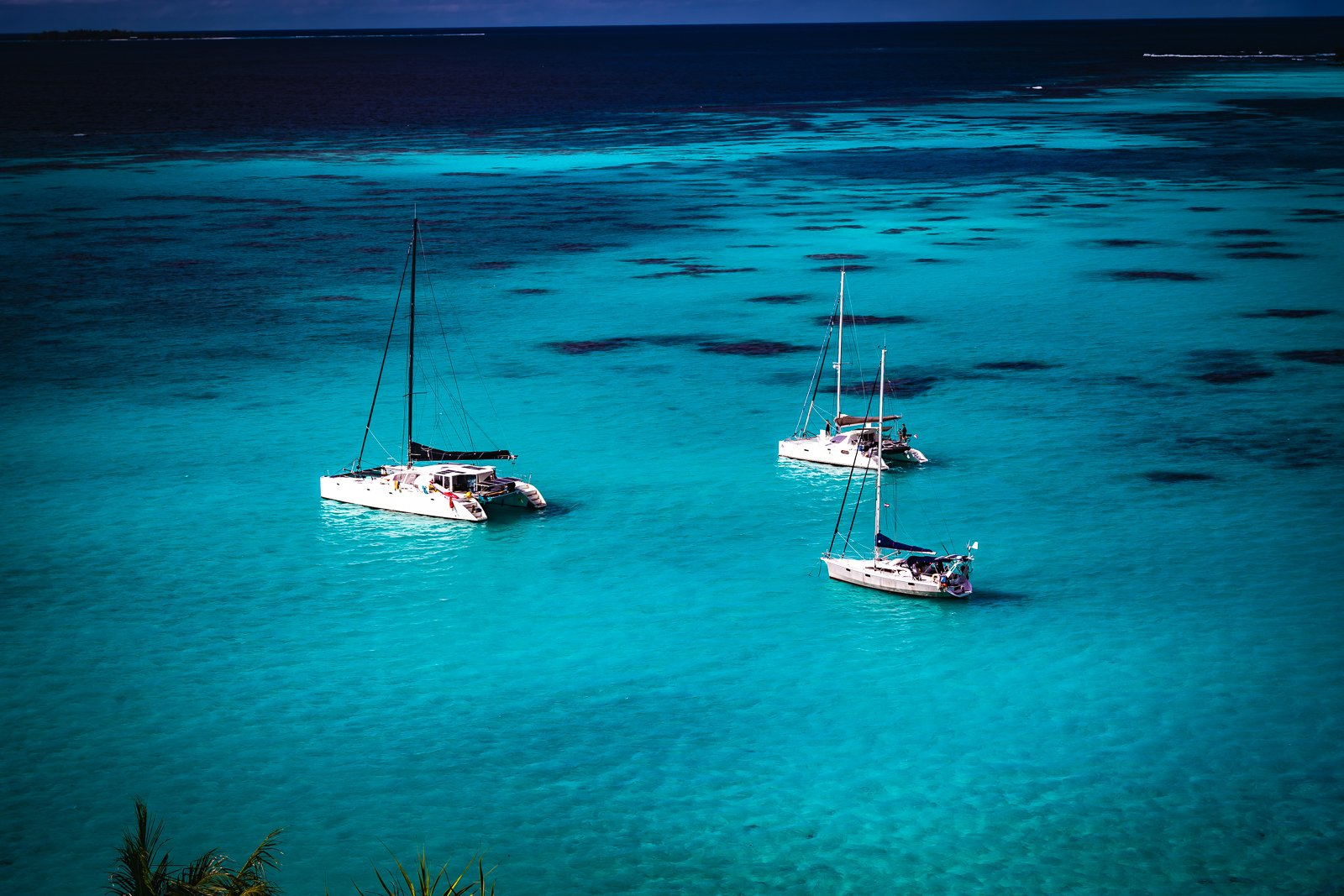
Left: Billie's relations, holding the high rocks above the turquoise. Right, top: the anchorage from the hill, three boats and a lot of water. Right, bottom: reef shadows under the keels, read like a map.
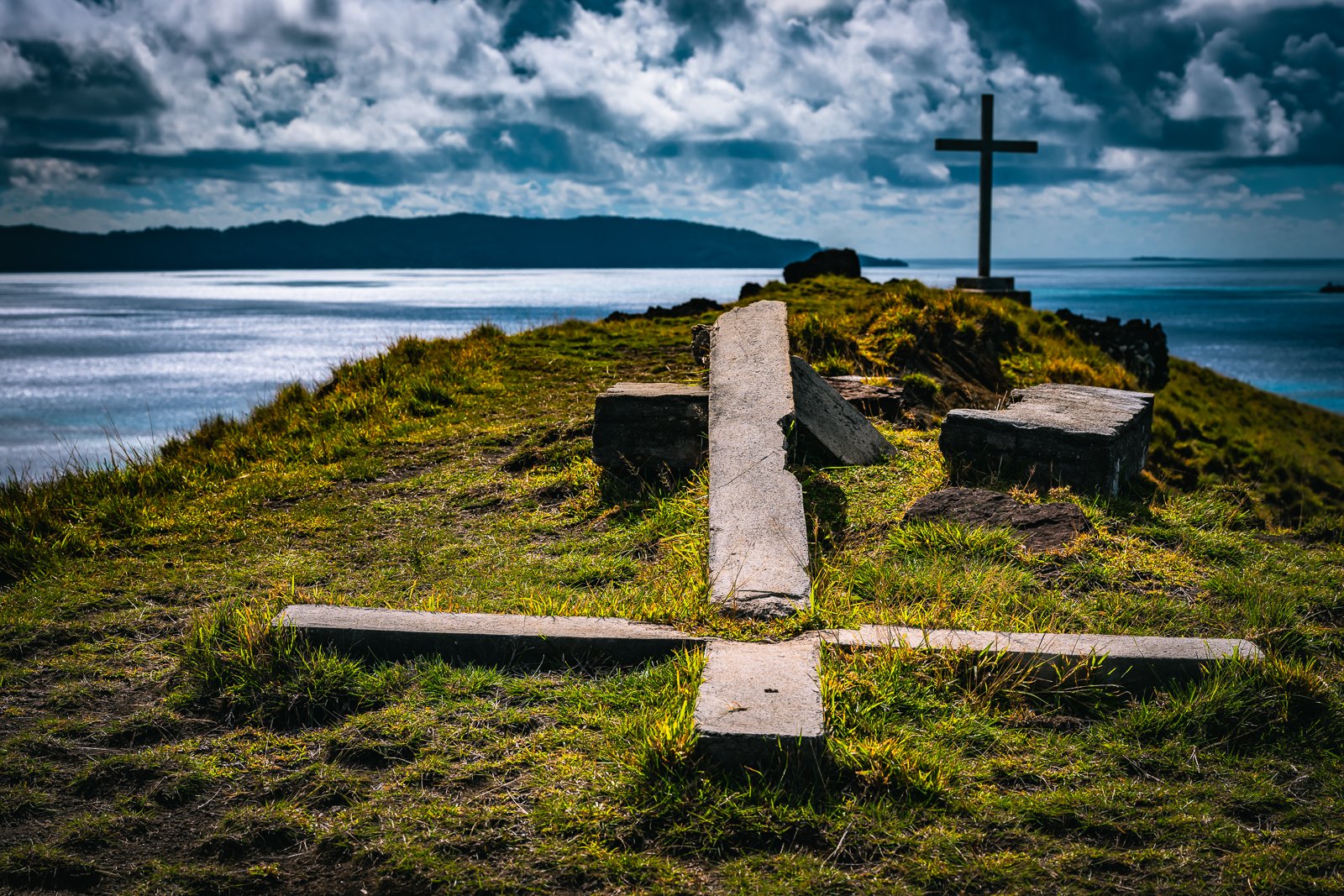
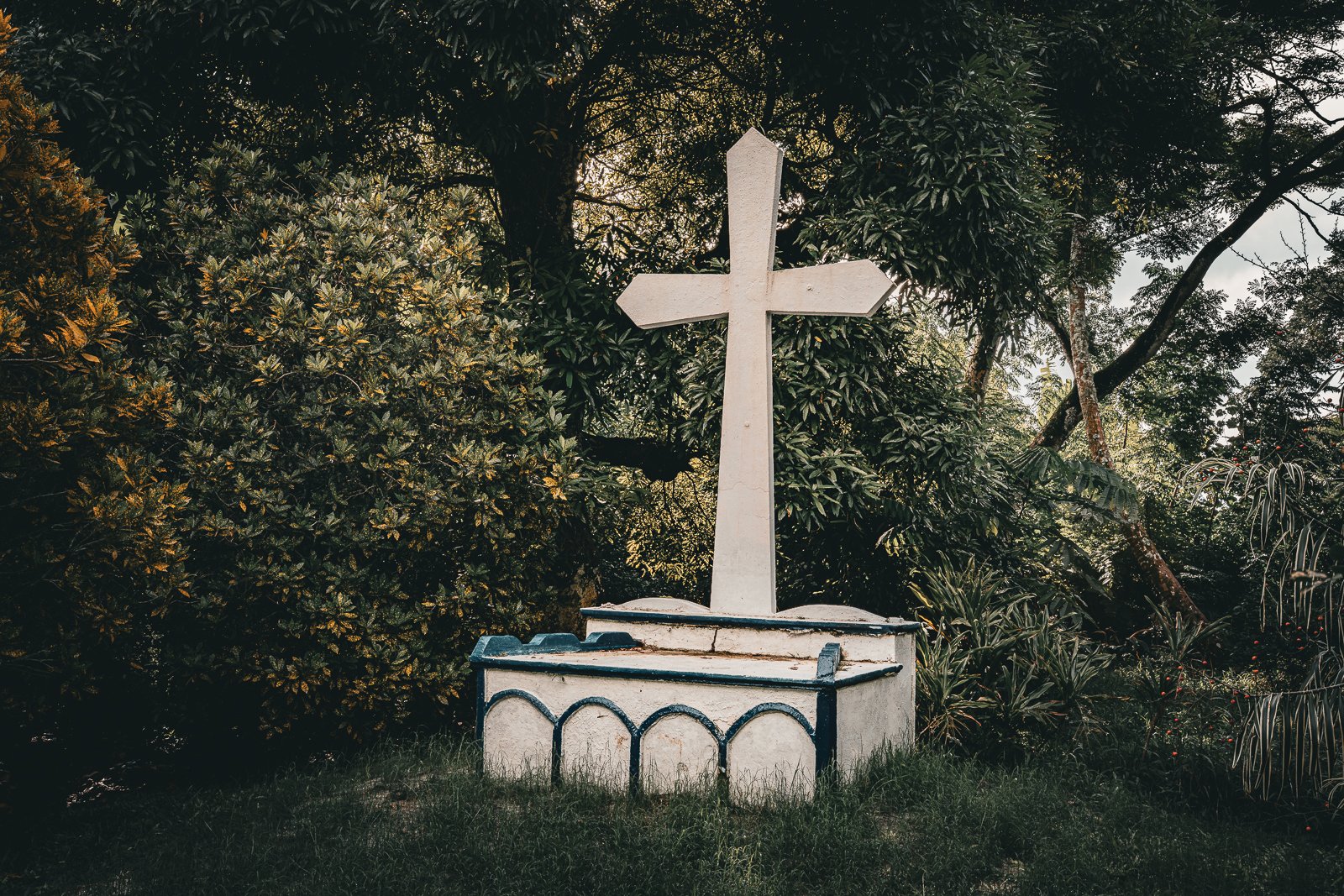
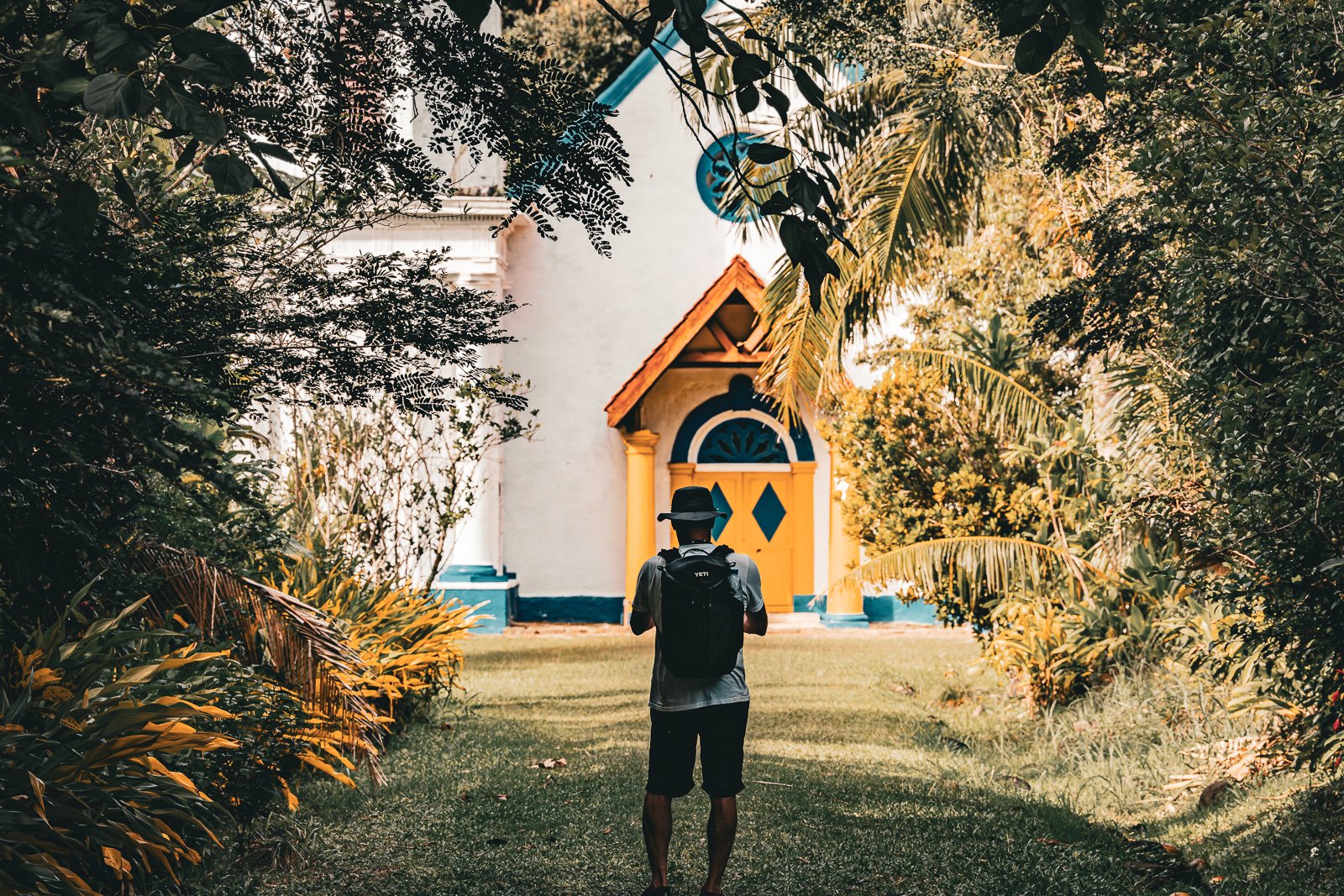
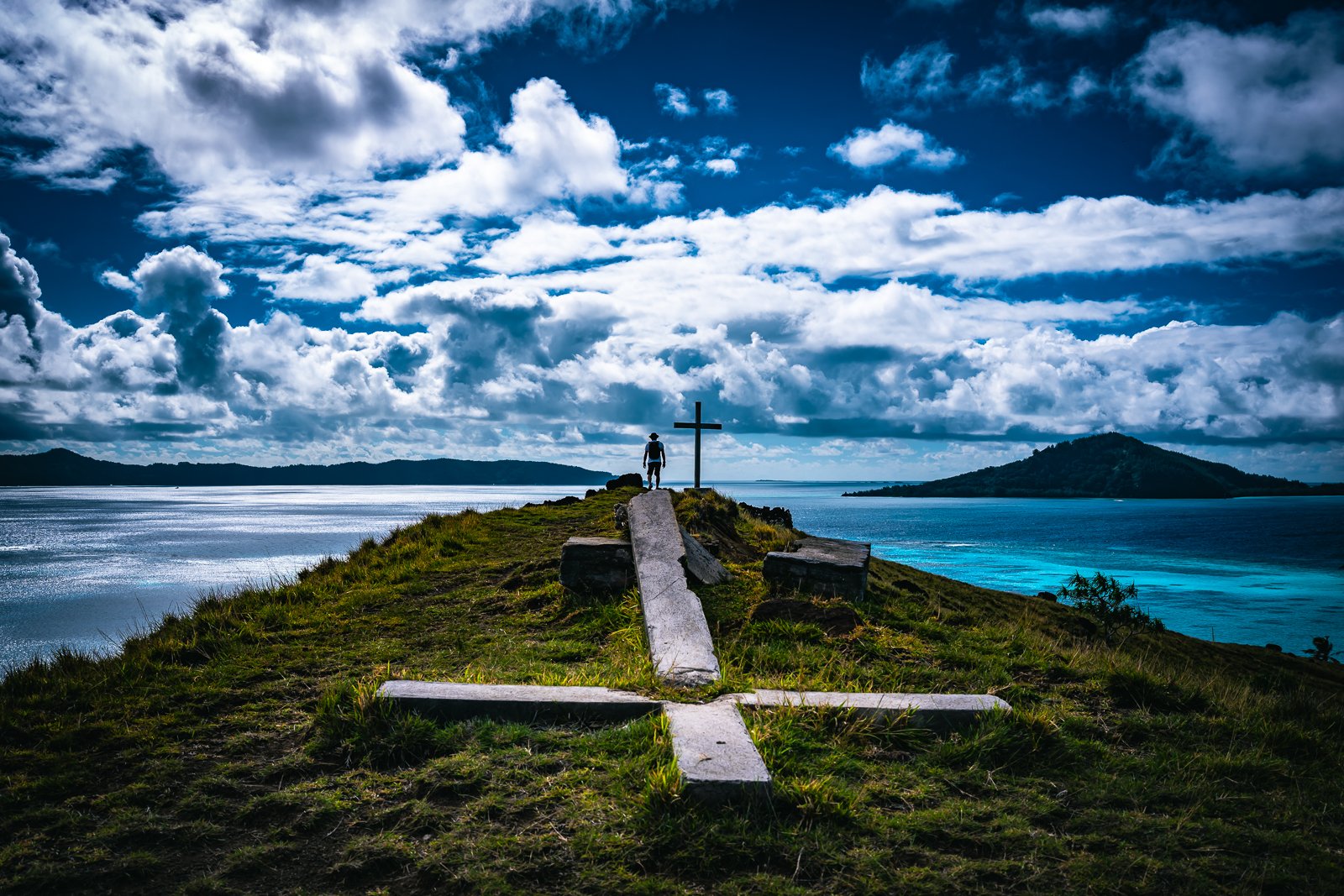
Left: a cross laid flat in the grass, pointing the way it fell. Right, top: an older stone cross, half taken back by the bush. Right, bottom: the walk up to the chapel, through somebody's idea of a garden.
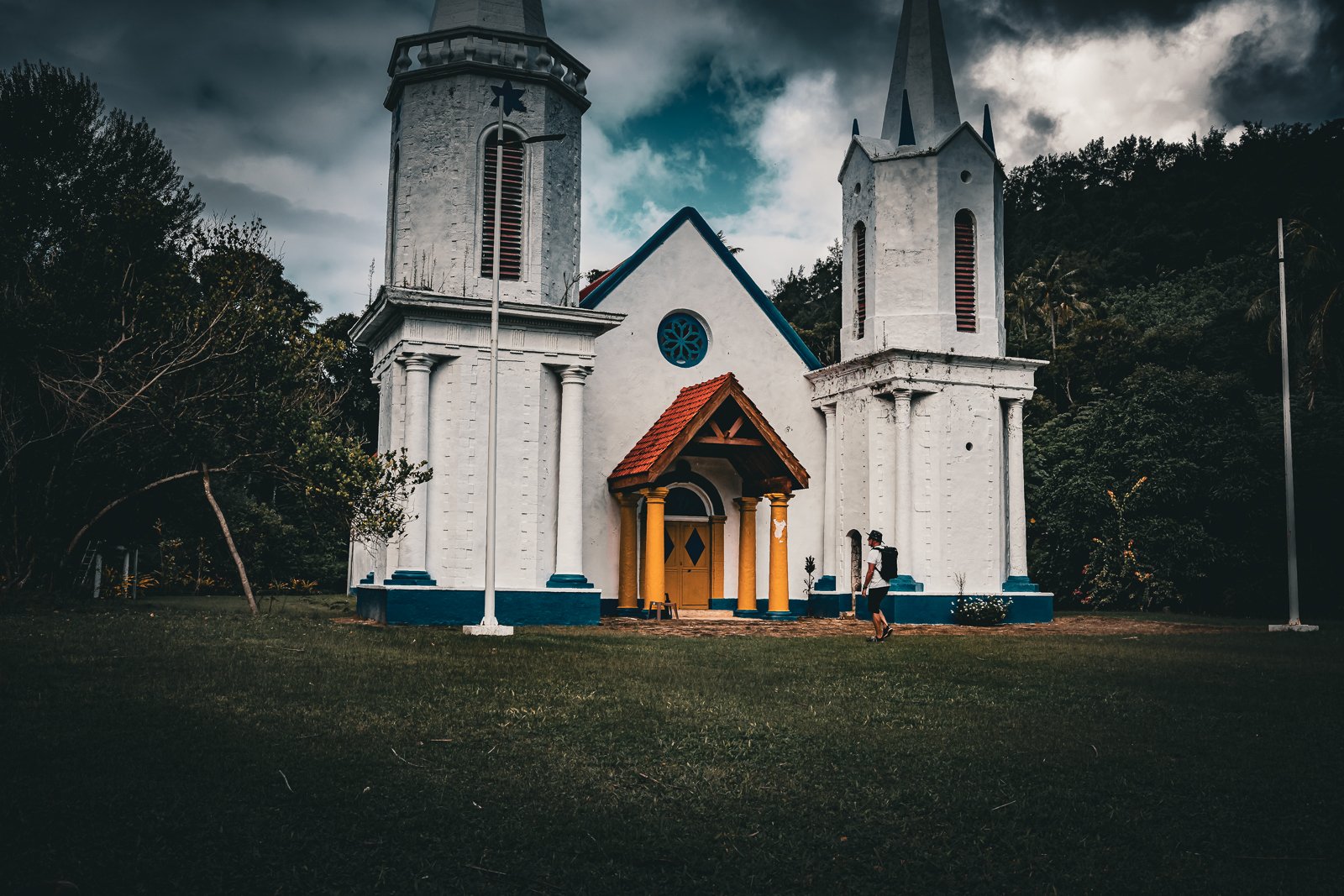
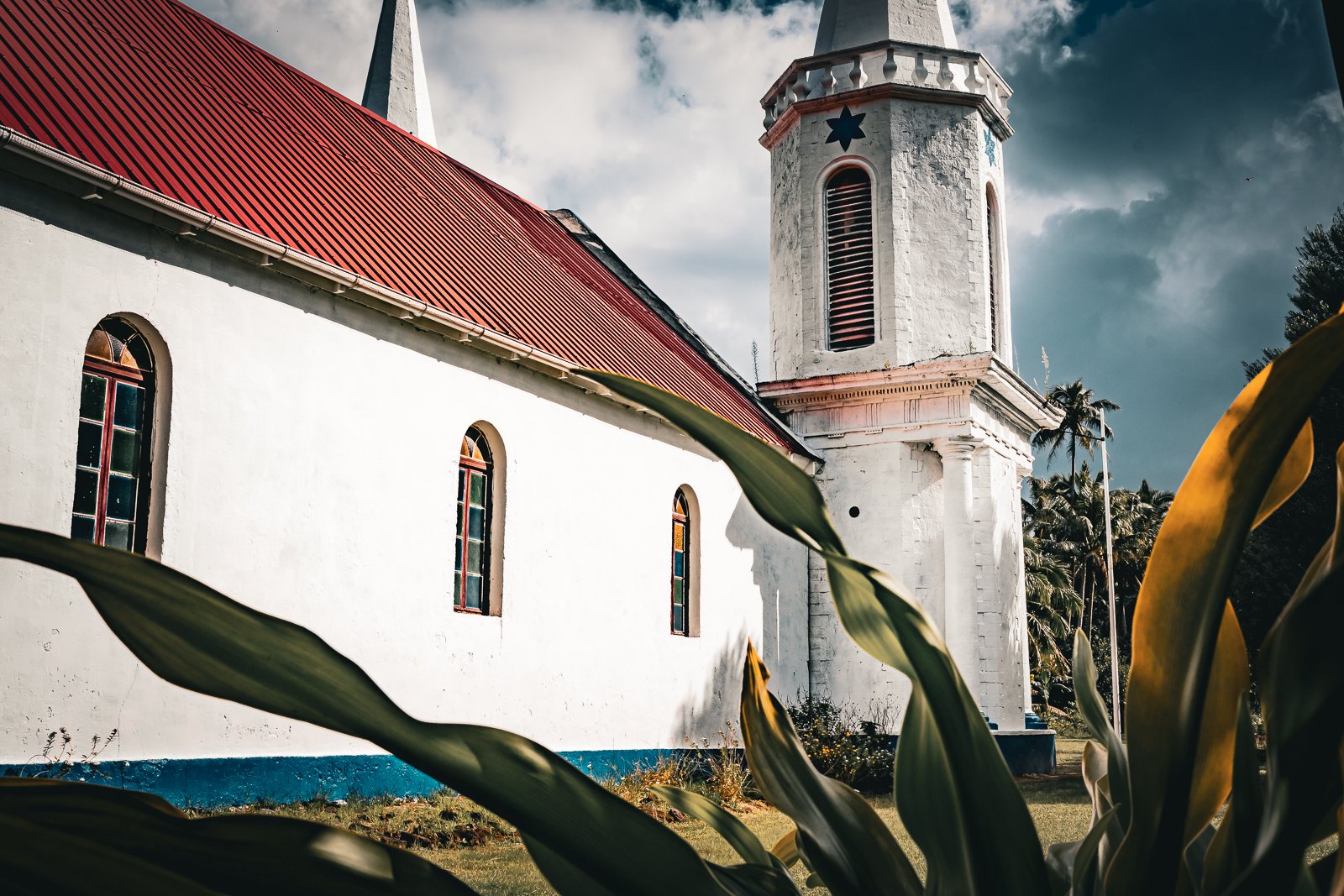
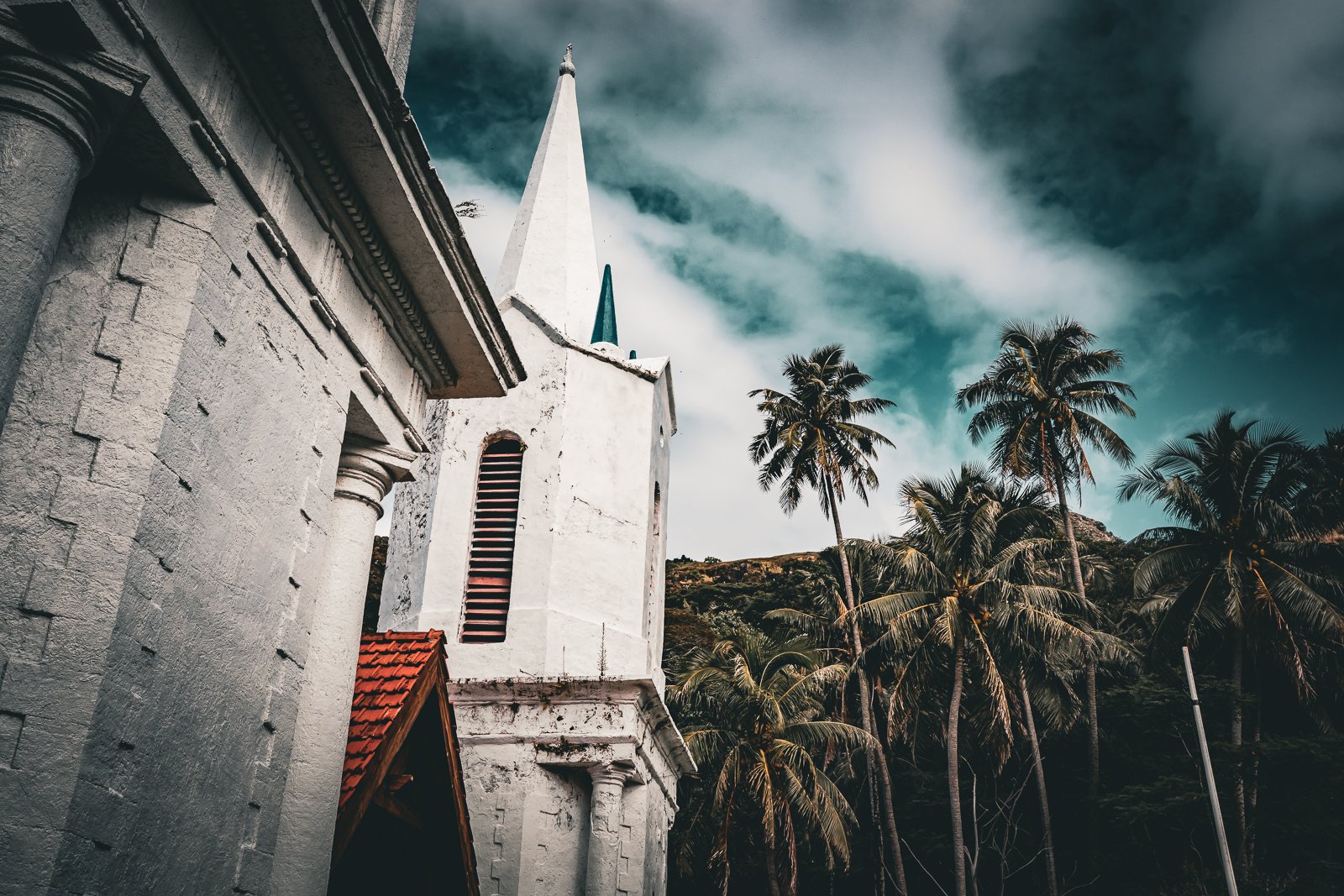
Left: Notre-Dame-de-la-Paix, far too big for the island it stands on. Right, top: a star set into the bell tower, the agave keeping its distance. Right, bottom: looking straight up the spire, palms doing their best to match it.
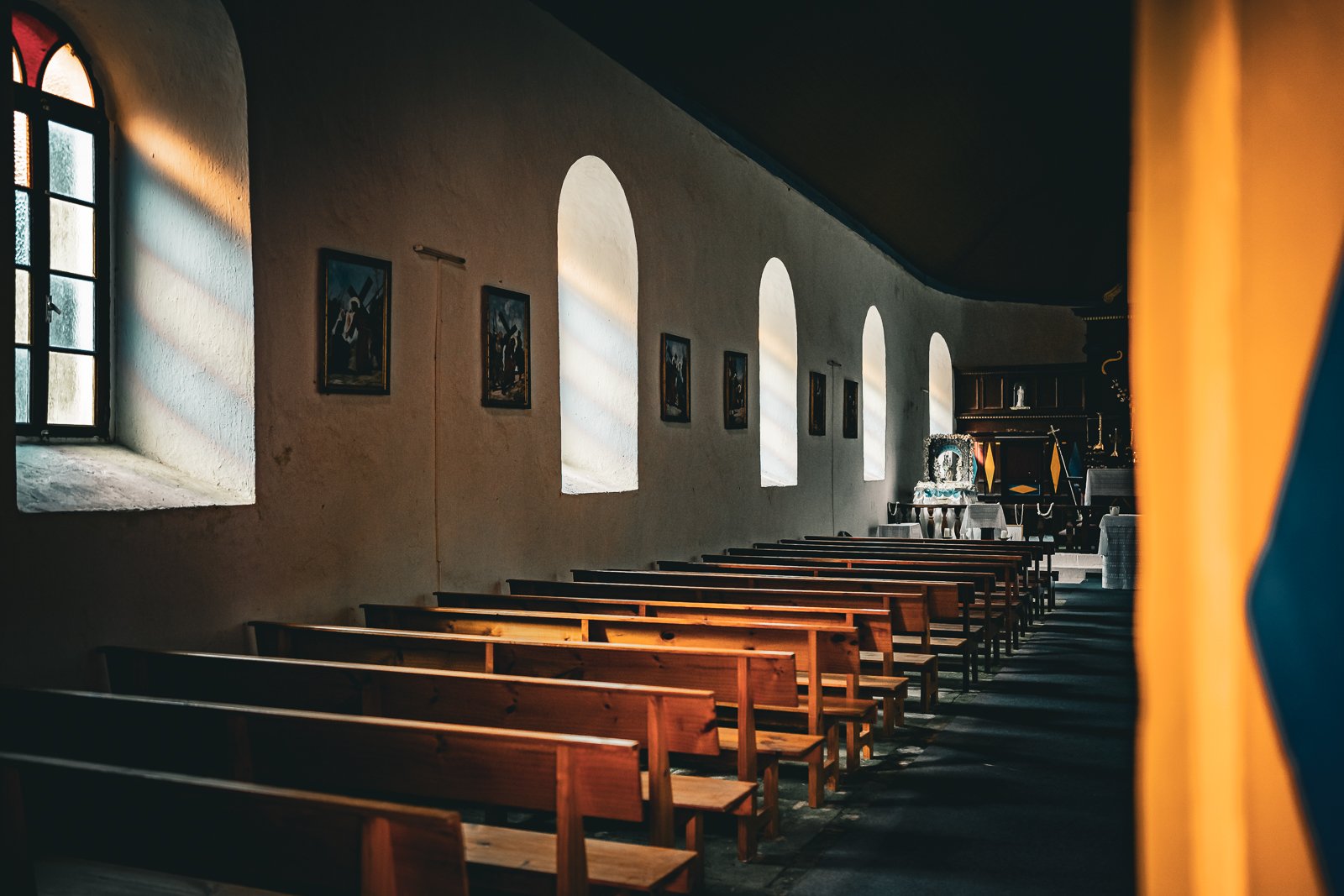
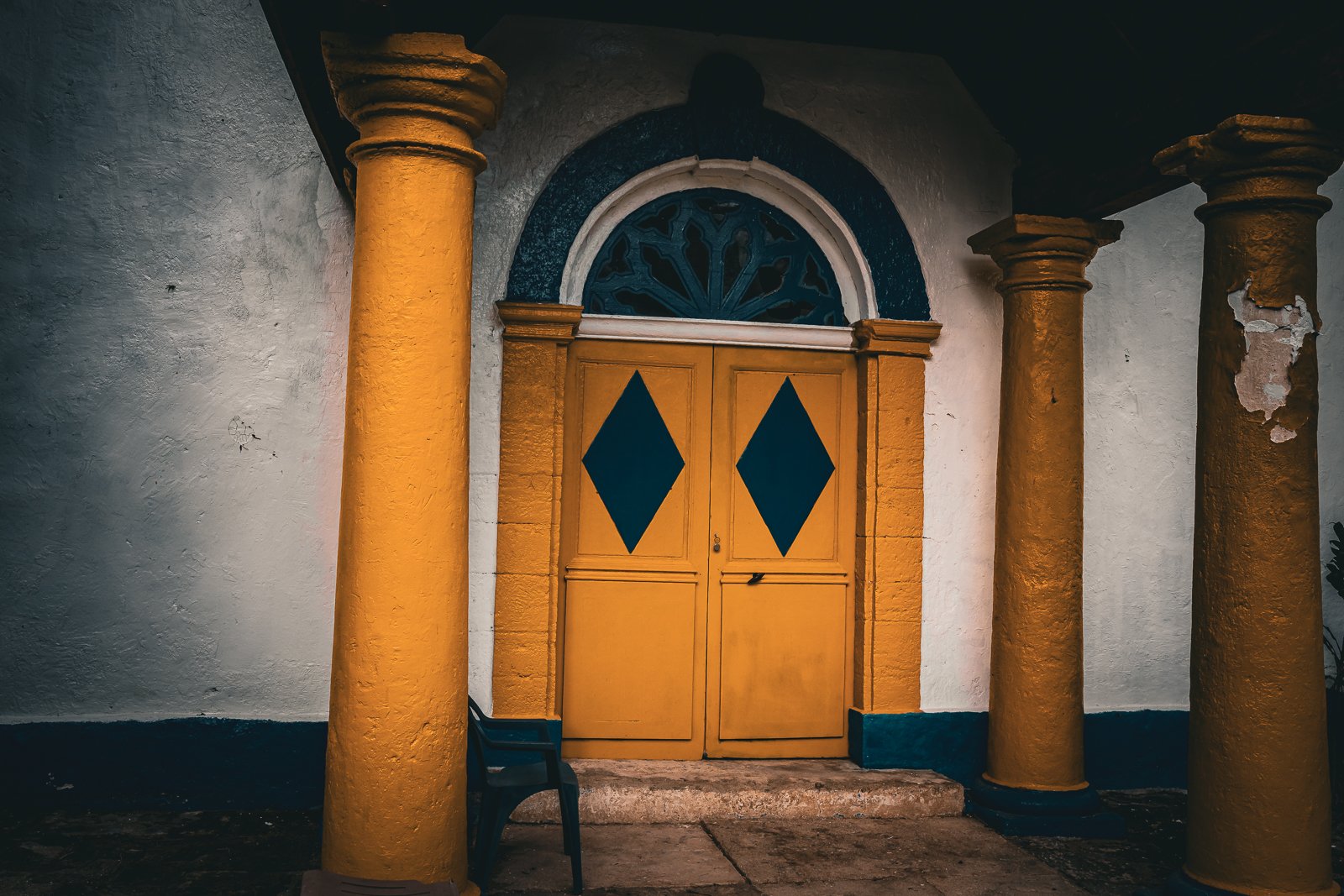
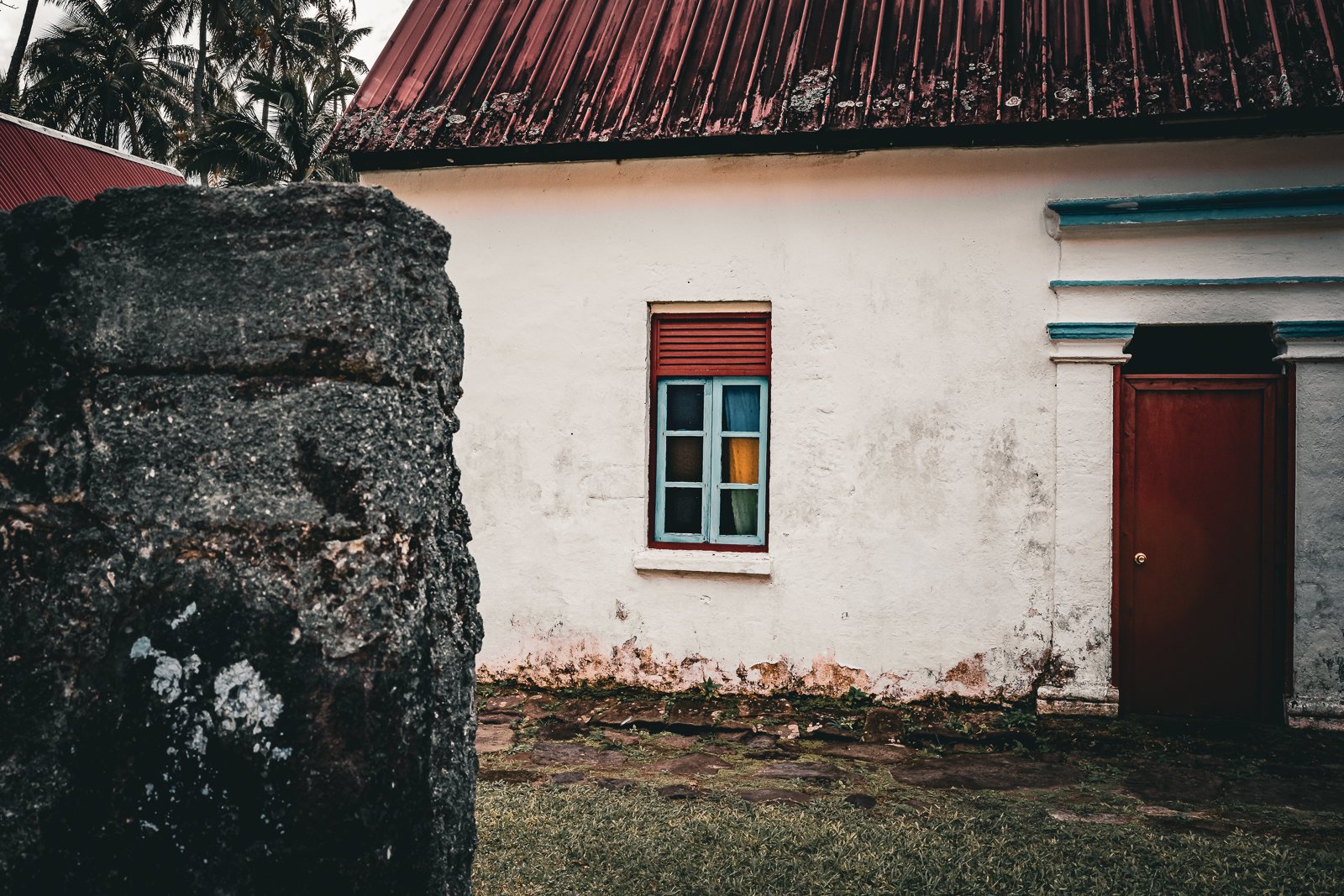
Left: inside, empty pews and a row of arches doing all the talking. Right, top: the side door, yellow with two blue diamonds, locked for the afternoon. Right, bottom: a window full of colored glass, and a stone that has seen the whole thing.