The boat stayed in Rikitea. I flew up to Papeete with one lens and one rule, and a few days to walk. A 35mm, locked between f5.6 and f8, no swap, no zoom, no exception. The point was to slow the walking down. When the camera stops having choices, the photographer has to make all of them, and the picking gets honest.
There is a reason street photographers keep coming back to a 35mm. It sits close to how the eye actually reads a scene, wide enough to hold the room, tight enough to mean something. The aperture range matters as much. At f5.6 to f8, almost everything from a few meters out to the far wall stays sharp, which means the camera does not need another thought from you. The only thing left is where to stand and when to press the shutter. That is the whole craft, distilled.
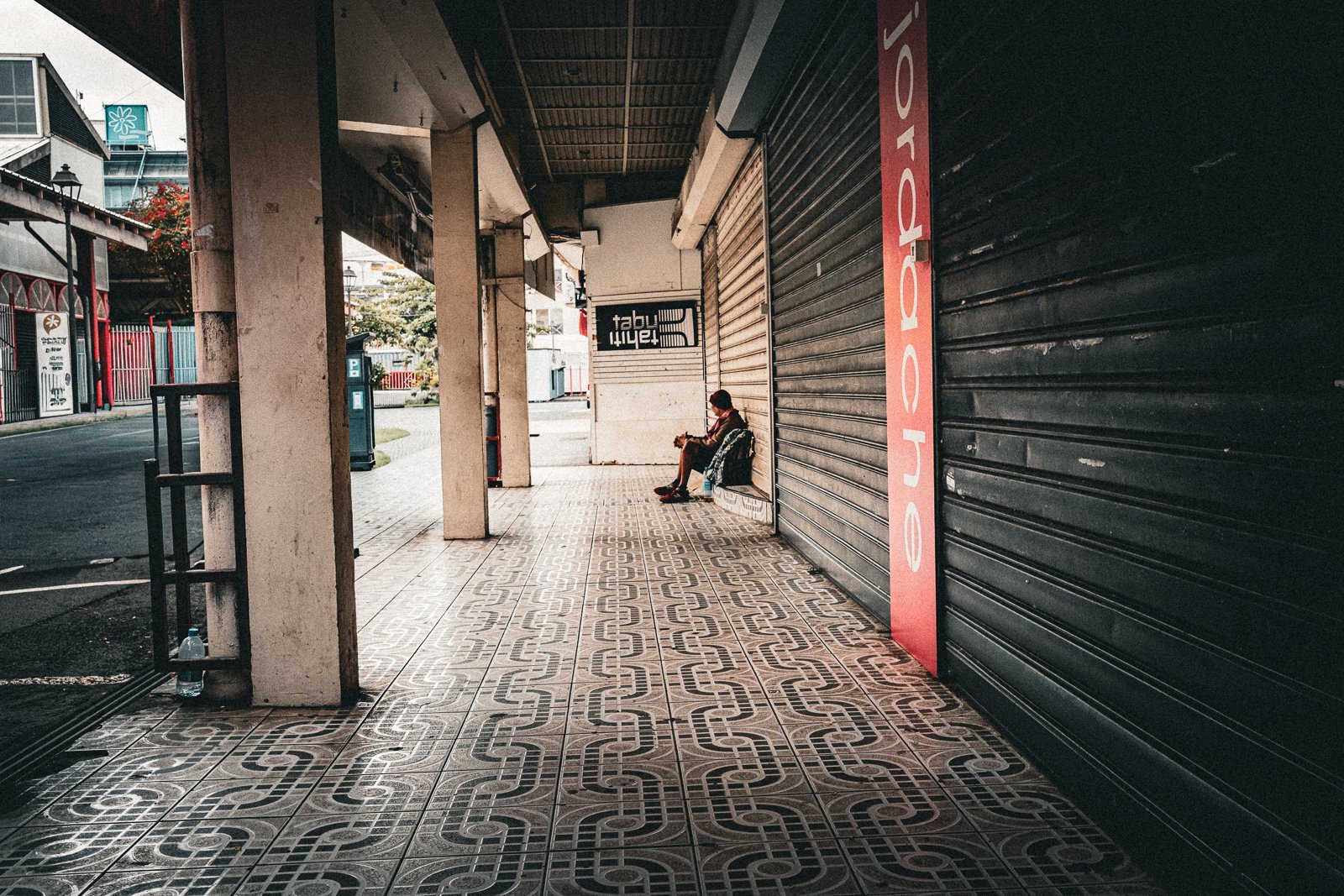
Papeete in the off-hour is not the postcard. The waterfront has a hotel I kept passing without naming, palm trees through plate glass, market arcades with iron railings the color of dried blood. Outside a shuttered shop I found a Land Cruiser, its hood a constellation of rust, and a small wooden cross resting on the passenger seat. A man took shade under a tiled arcade and did not look up. Christmas lights were still strung over a long red-brick shopping street nobody was using. Nothing was happening, and that was the point.
The rain caught me twice and the people caught me a dozen more. It does not arrive in Papeete in stages. The sky opens, and you are soaked before you finish the thought. Every time I ducked under an awning to wait it out, somebody stopped to ask where I was from, did I need a lift, did I want coffee. Tahiti has a reputation for warmth that you assume is marketing, until you stand wet in a doorway and discover it is not. By the time the sky cleared I had a damp camera and the same lens still on the body. Now I am back in the Gambier with two friends, and we are cruising the archipelago.
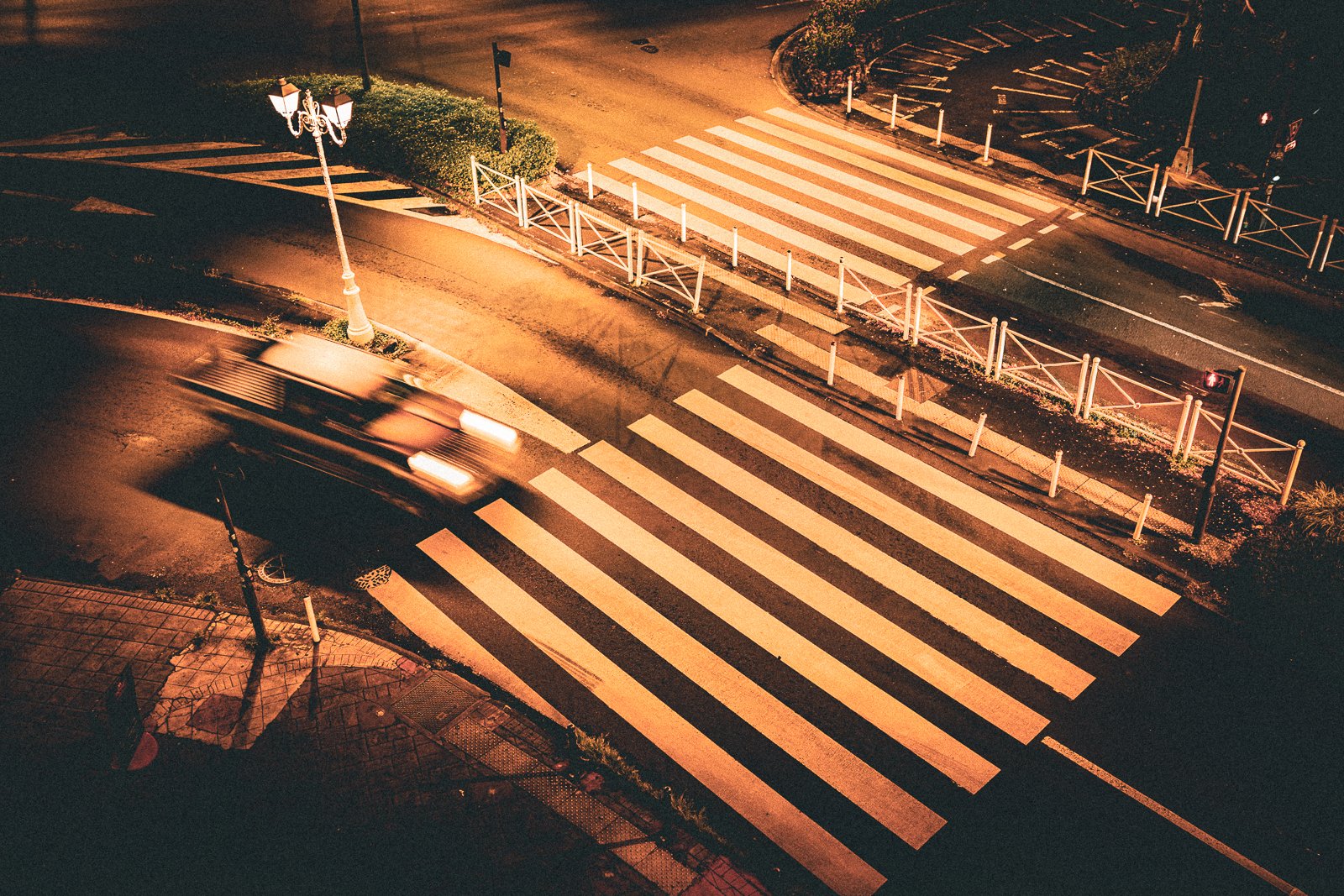
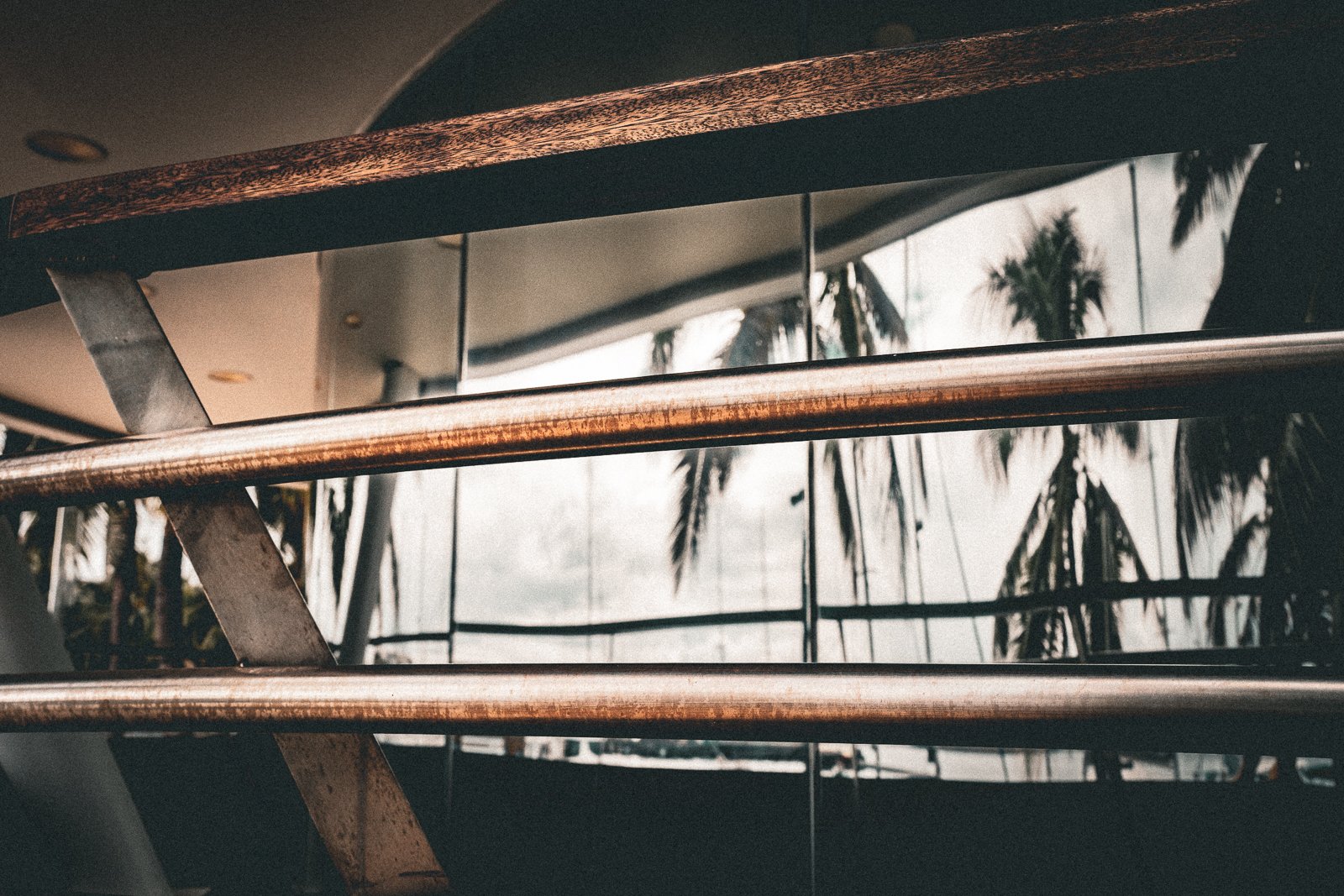
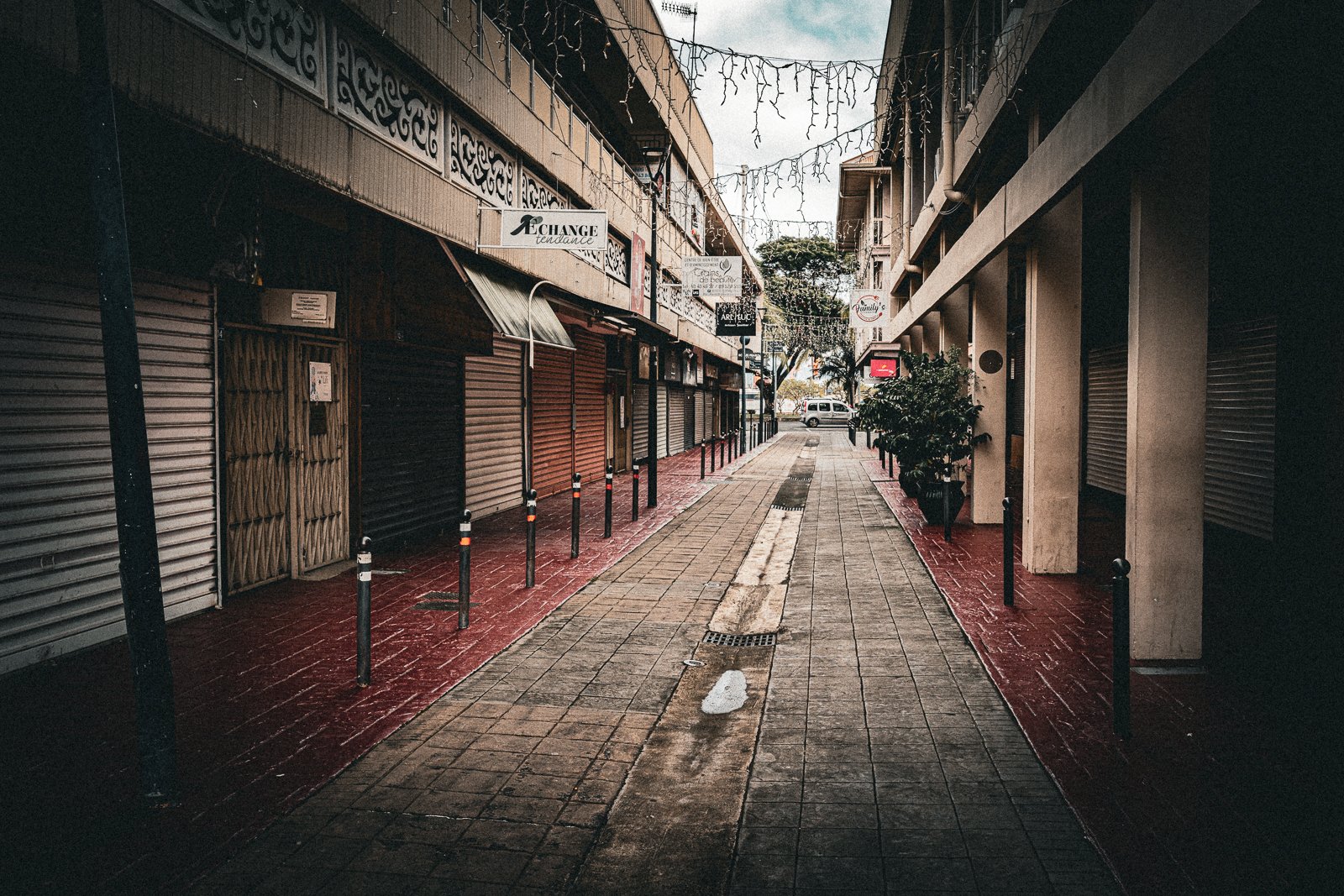
Left: a wet street after the rain. Right, top: palms through plate glass. Right, bottom: a shopping street still strung with last season's lights.
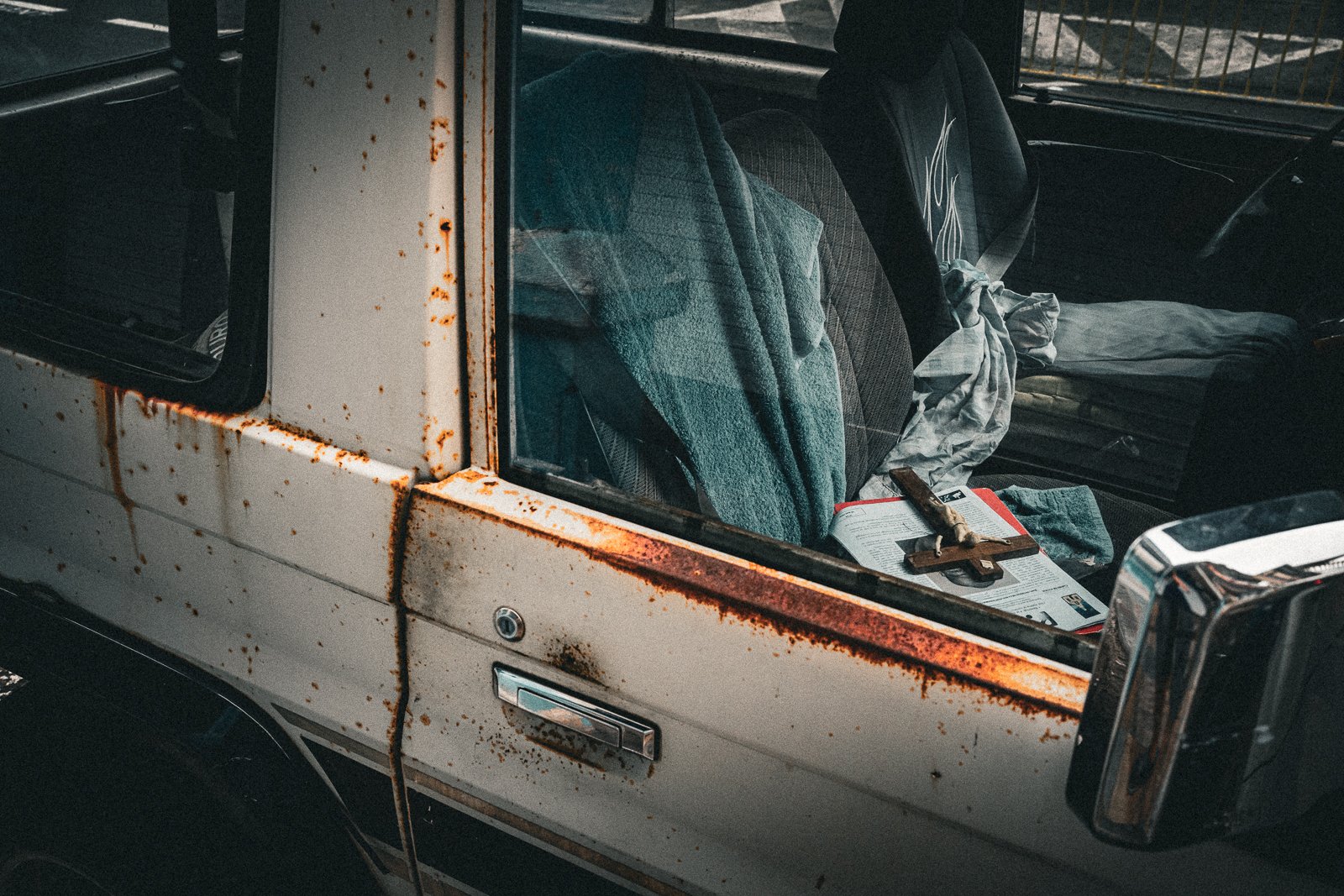
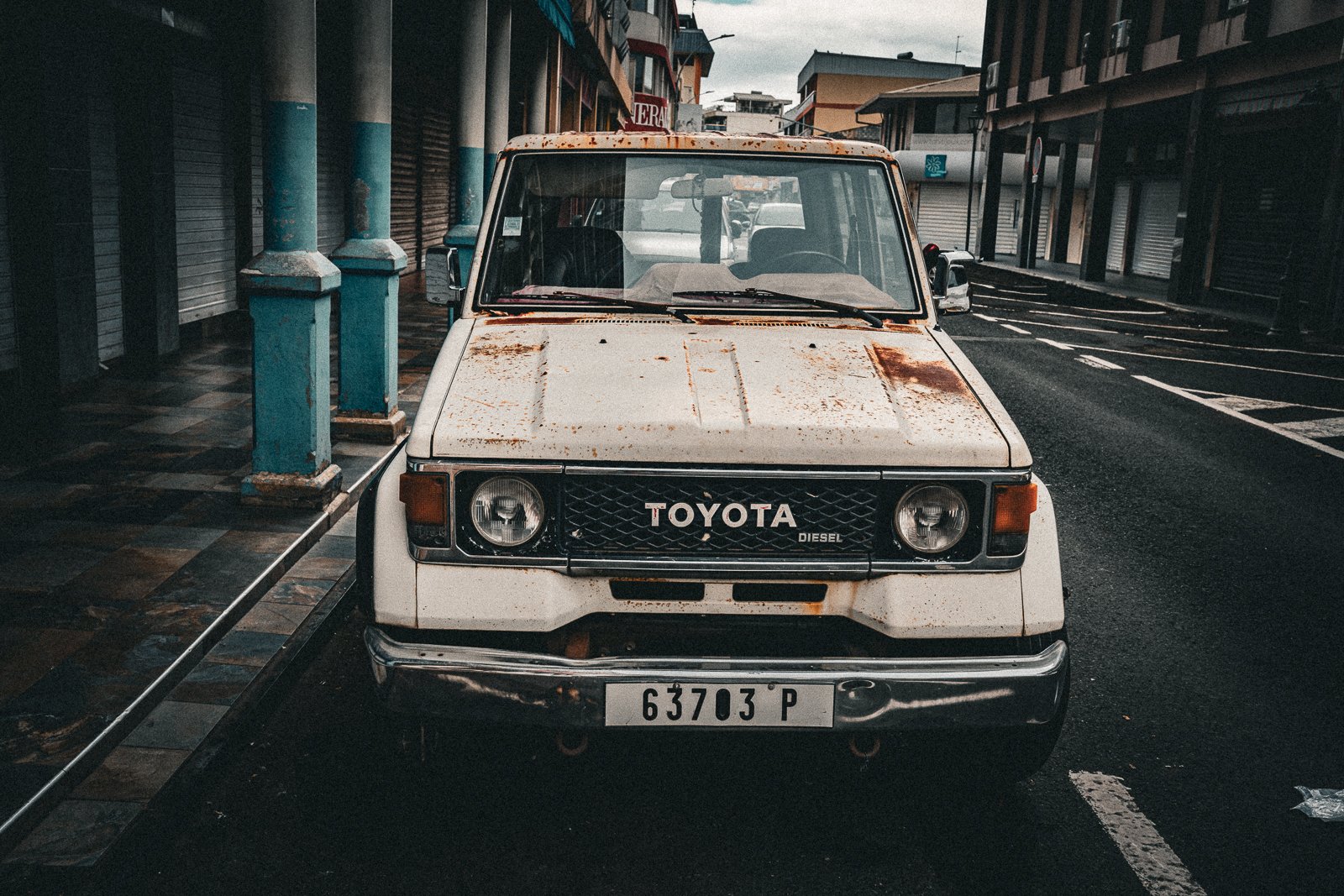
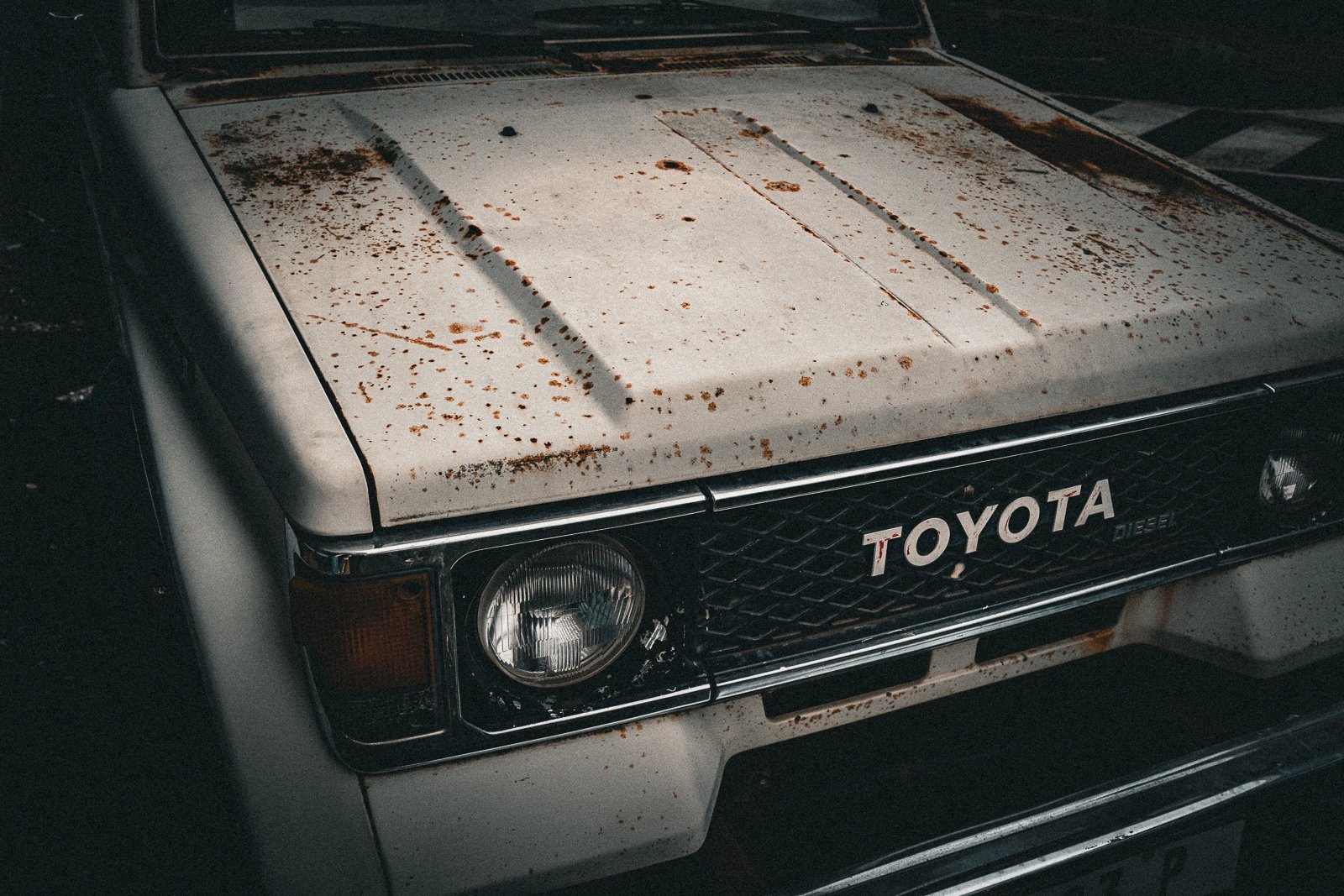
Left: a small wooden cross on the passenger seat. Right, top: the Land Cruiser keeping its own counsel. Right, bottom: the hood, paintwork yielding to iron.
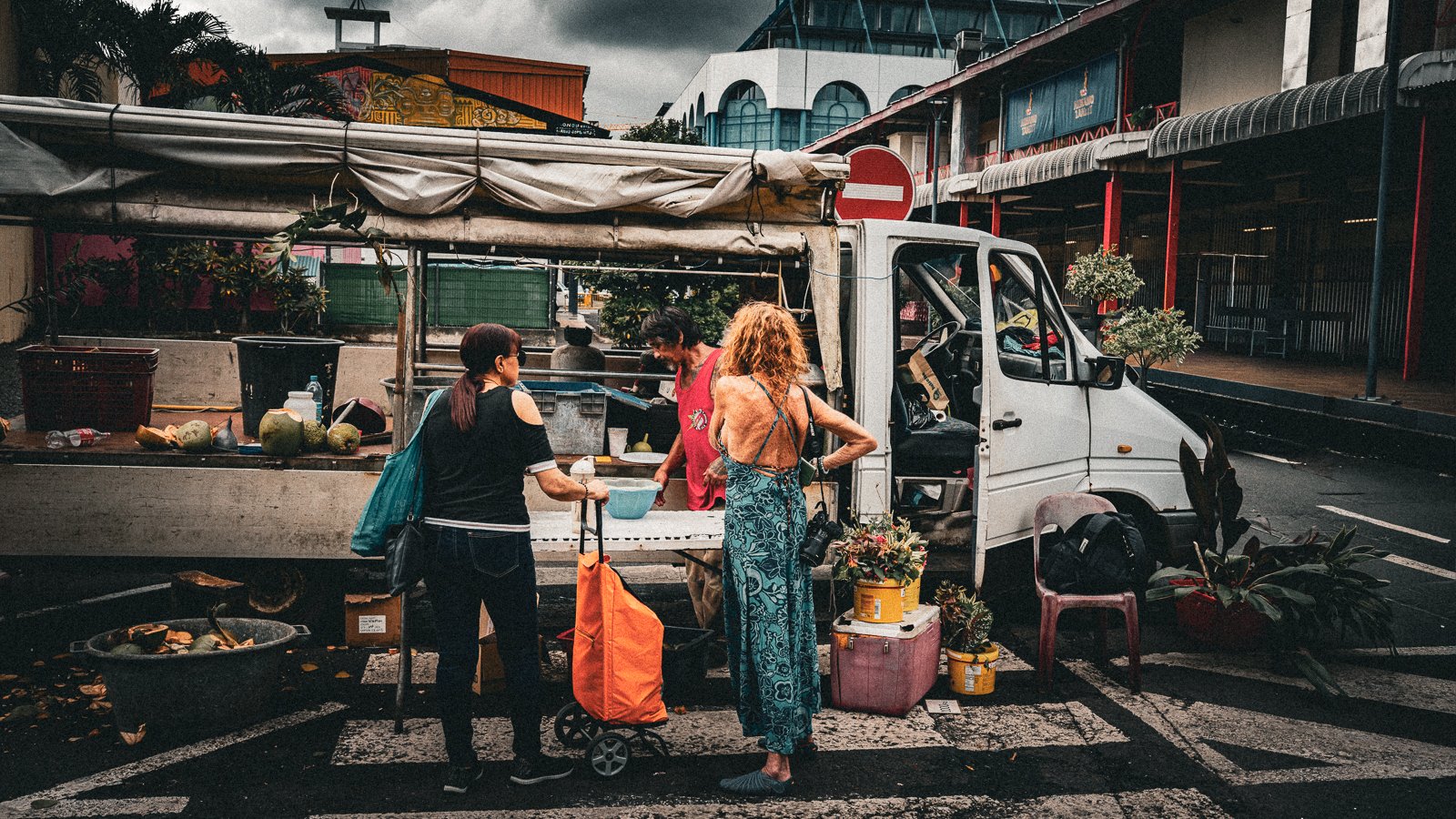
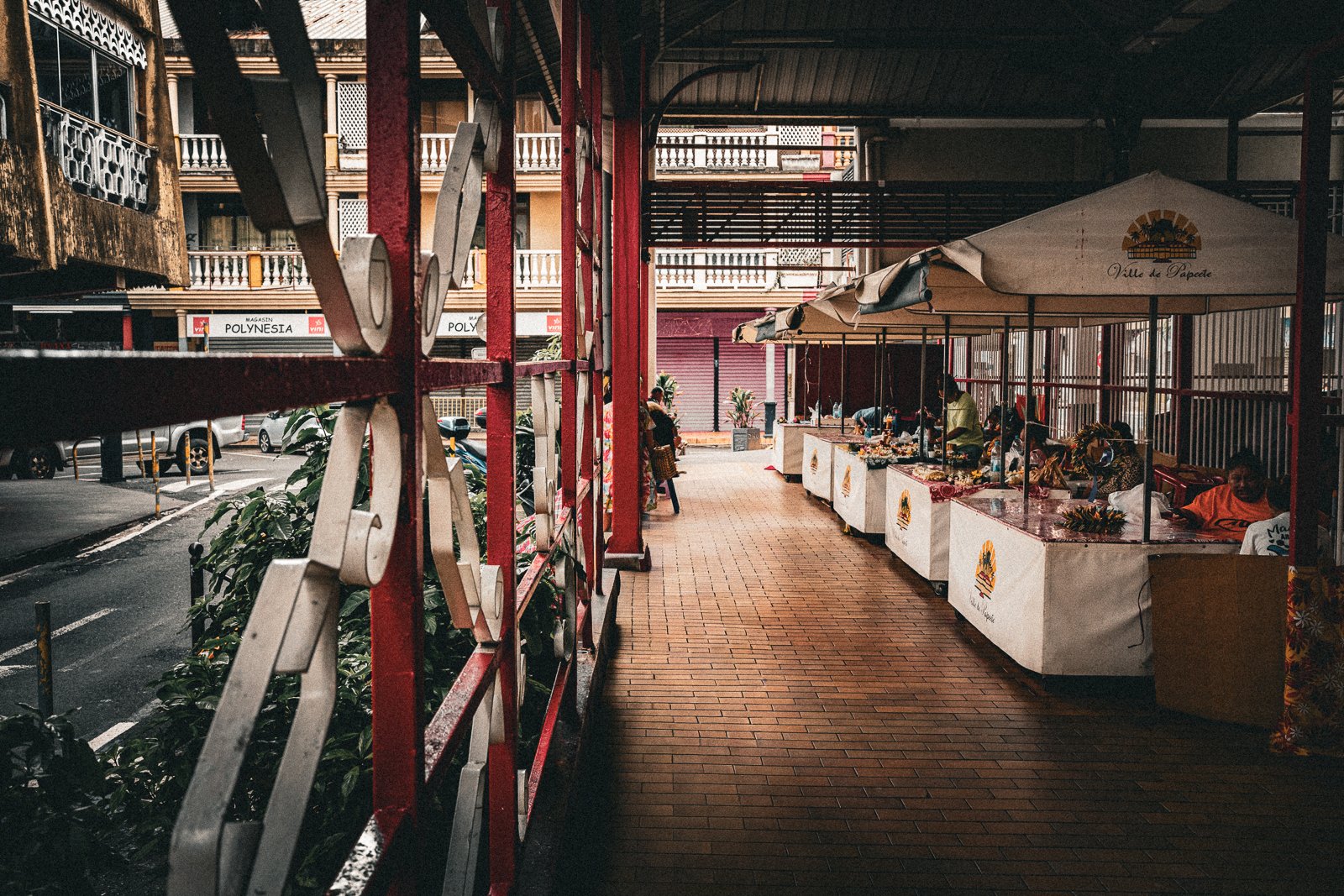
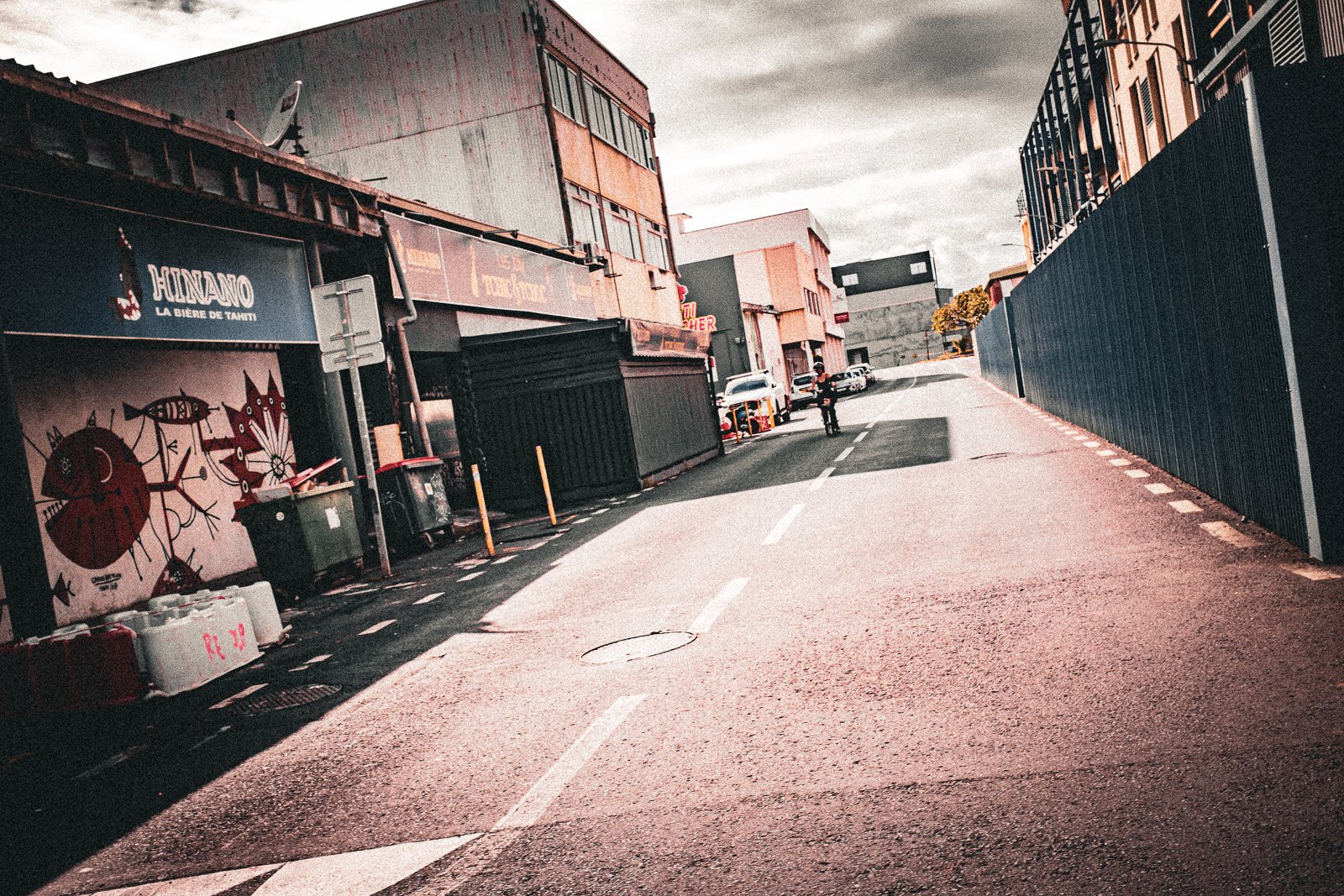
Left: Friday morning at the market. Right, top: iron railings inside the public market. Right, bottom: a side street with Hinano on the wall.
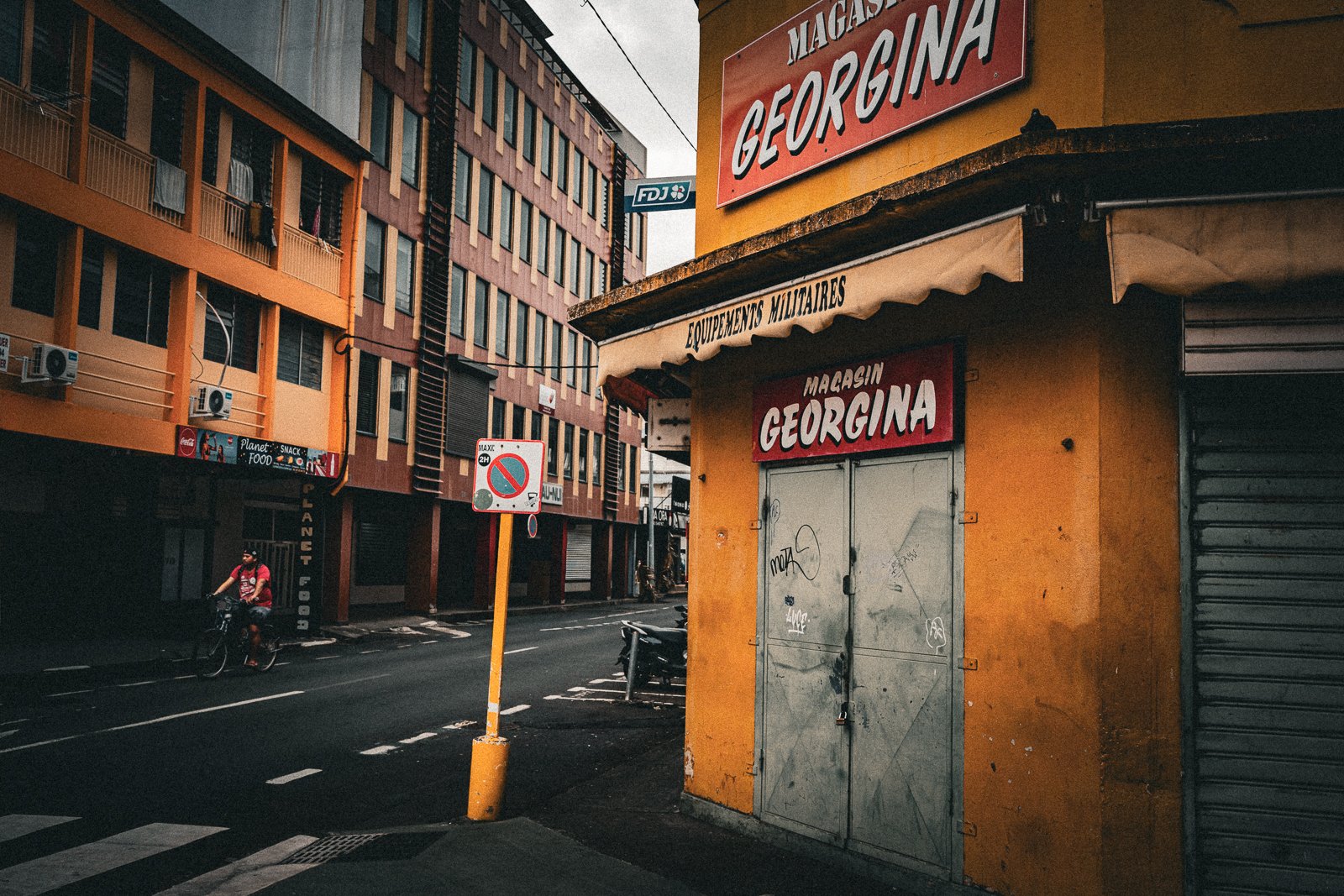
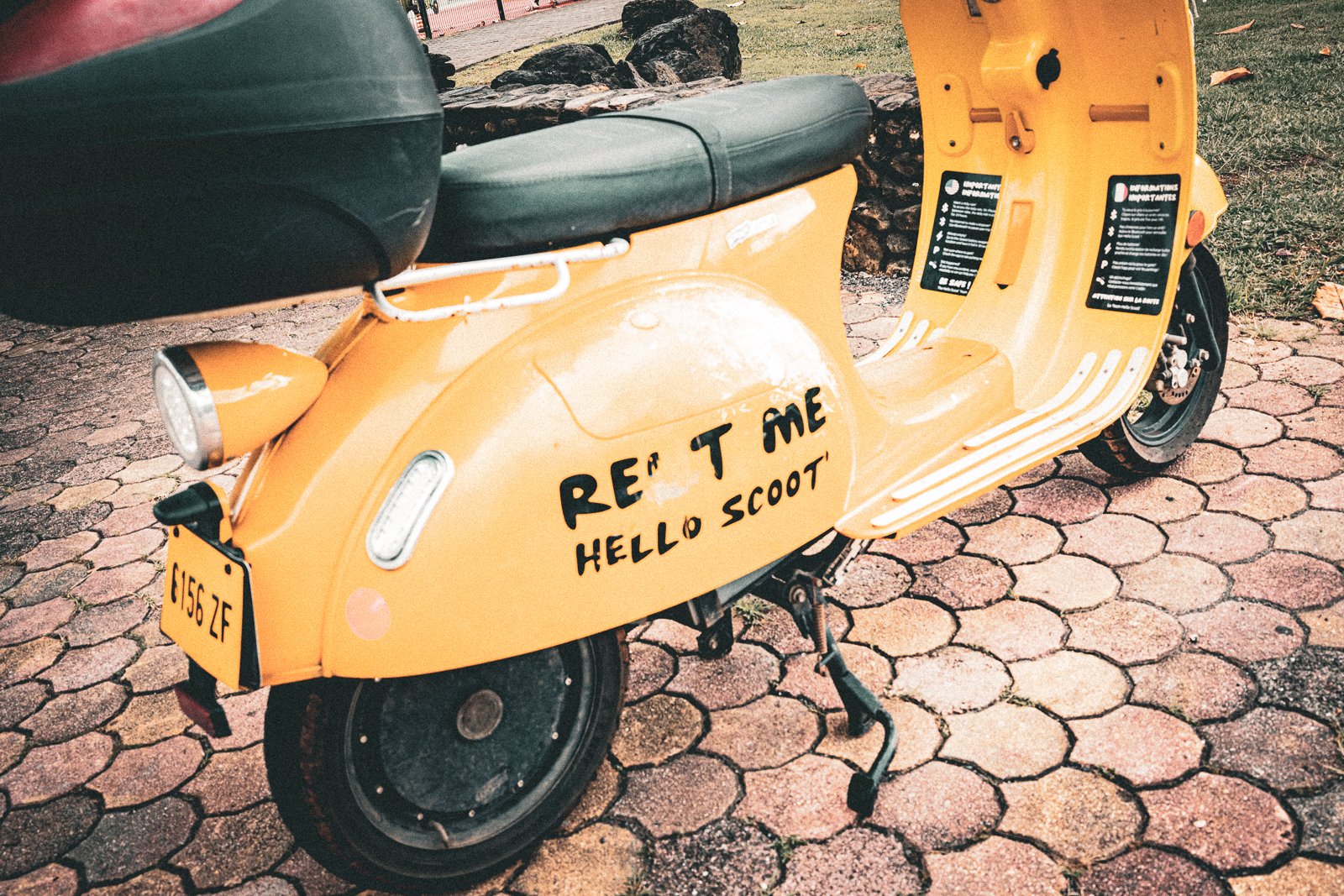
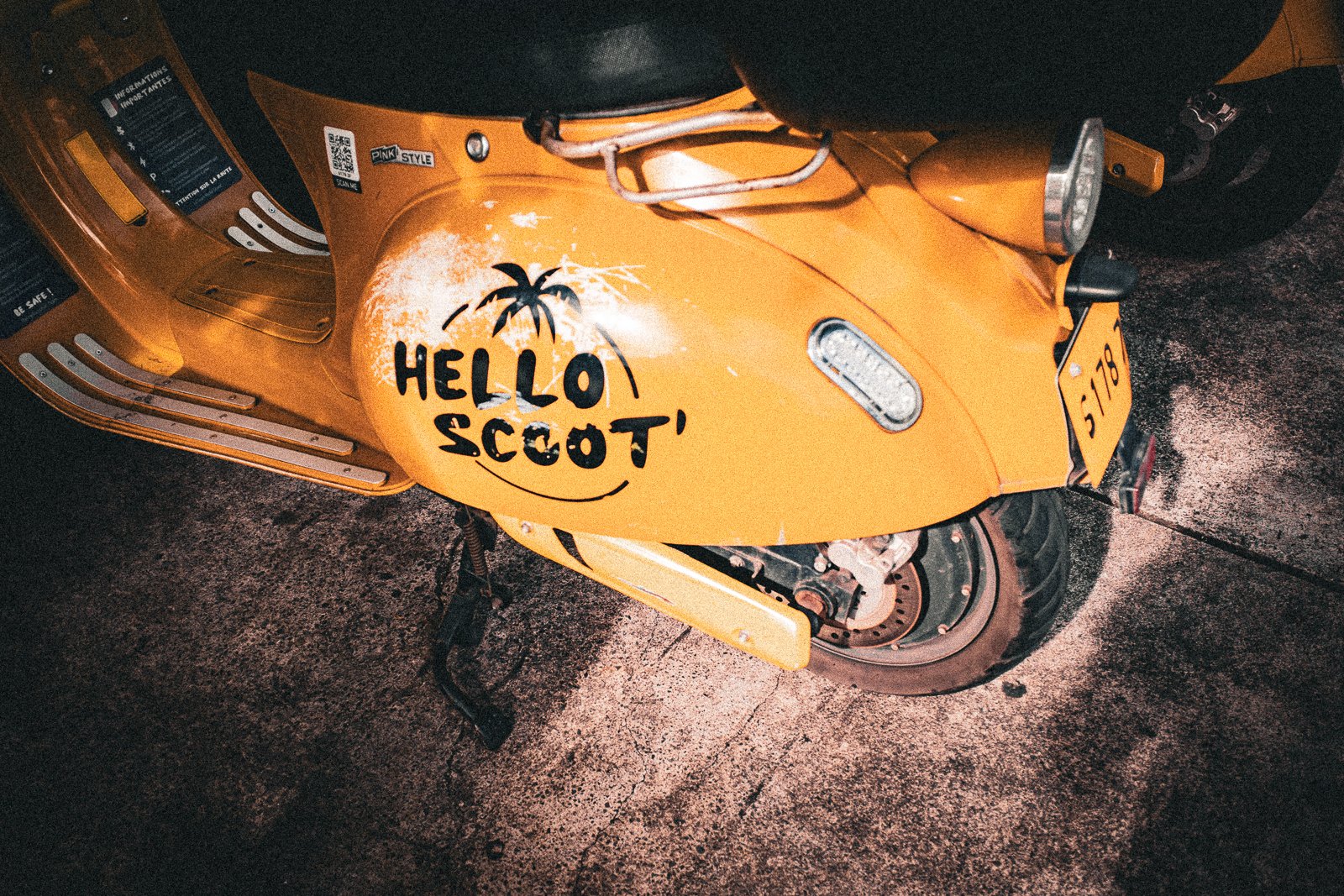
Left: a yellow corner shop selling military surplus. Right, top: a rental Vespa scratched with its own name. Right, bottom: a palm tree dotting the i.