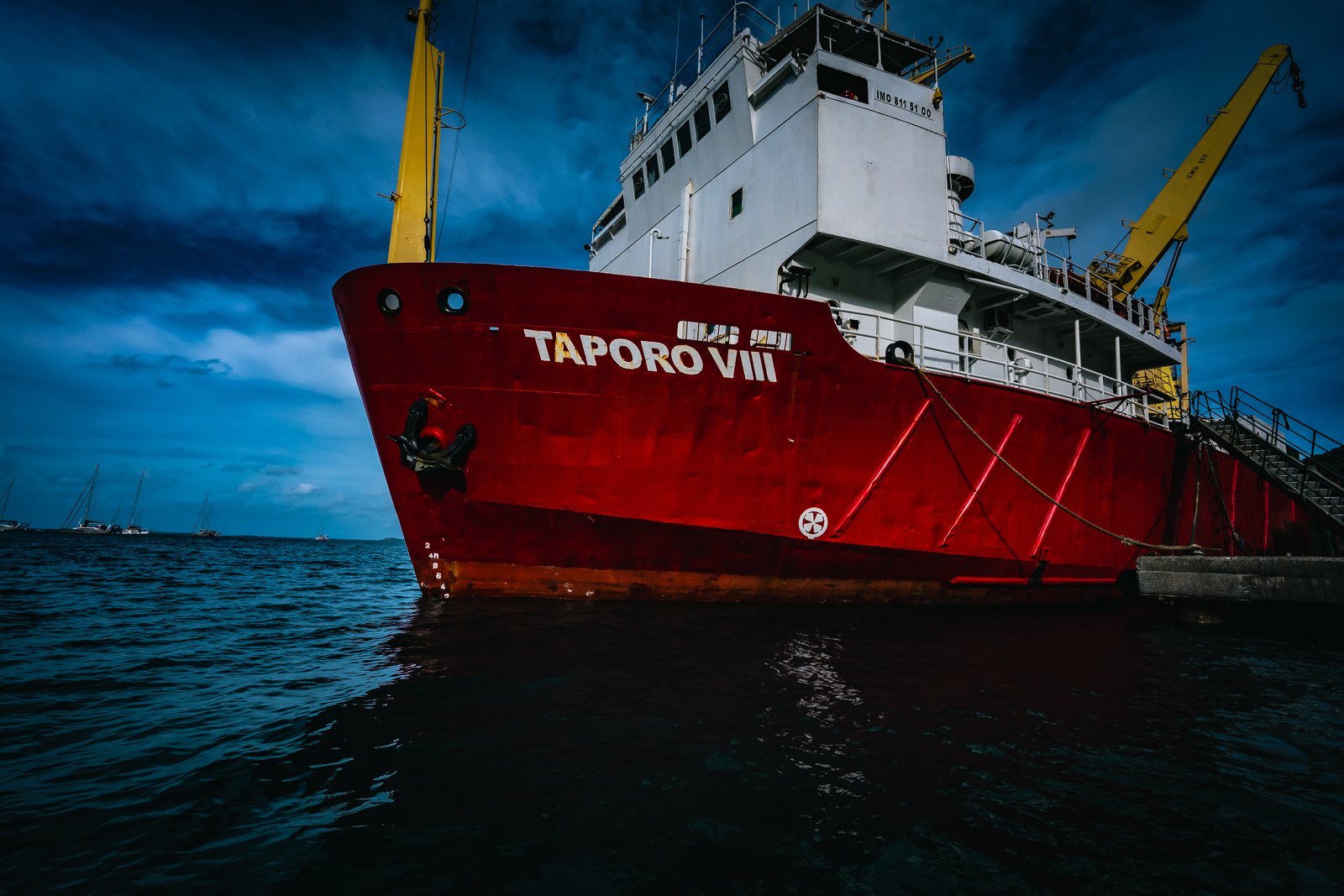
Rikitea has a rhythm built around the cargo ship. Every second Monday, the TAPORO VIII rounds the breakwater and ties up at the quay, and the whole island is suddenly busy. Boxes of produce, bolts of fabric, refrigerator units, motorcycles, a few pickup trucks dangling from a crane. Cruisers come too, dinghies at the wharf, looking for the same things as everyone else.
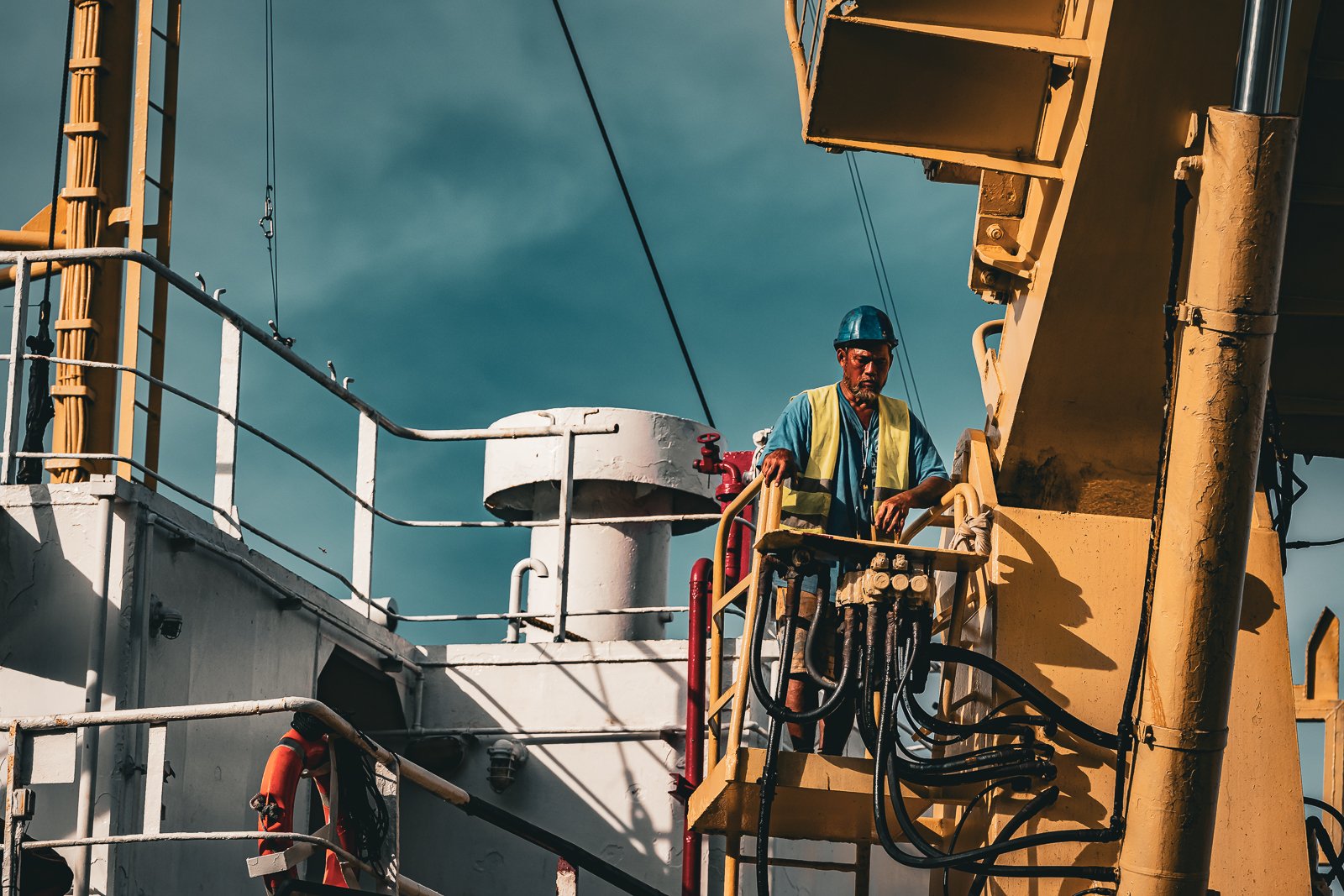
I went down with the camera and stayed for a few hours. The ship is a long flat red shape against the green hills. The crane is yellow, the safety vests are yellow, the helmets are blue. Men work in the sun with no wasted motion. The colors fight each other in the viewfinder, every frame a clash of primary tones.
The crane swings out over the dock. A pickup truck comes off the deck, suspended in straps, the operator easing it down through the air toward a strip of pallets where another crew is waiting. Trucks shuttle in and out. A ladder runs up the side of the hull. A man stands on top of stacked containers, looking out, like he is the one in charge of weather.
It is not chaos. It is fast and competent and runs to a pace that respects the heat. By late afternoon the dock is half empty, the crane is stowed, and the TAPORO VIII is quiet again. Everyone in town is putting groceries away. The next morning the ship leaves, and the harbour will not see her again for two weeks.
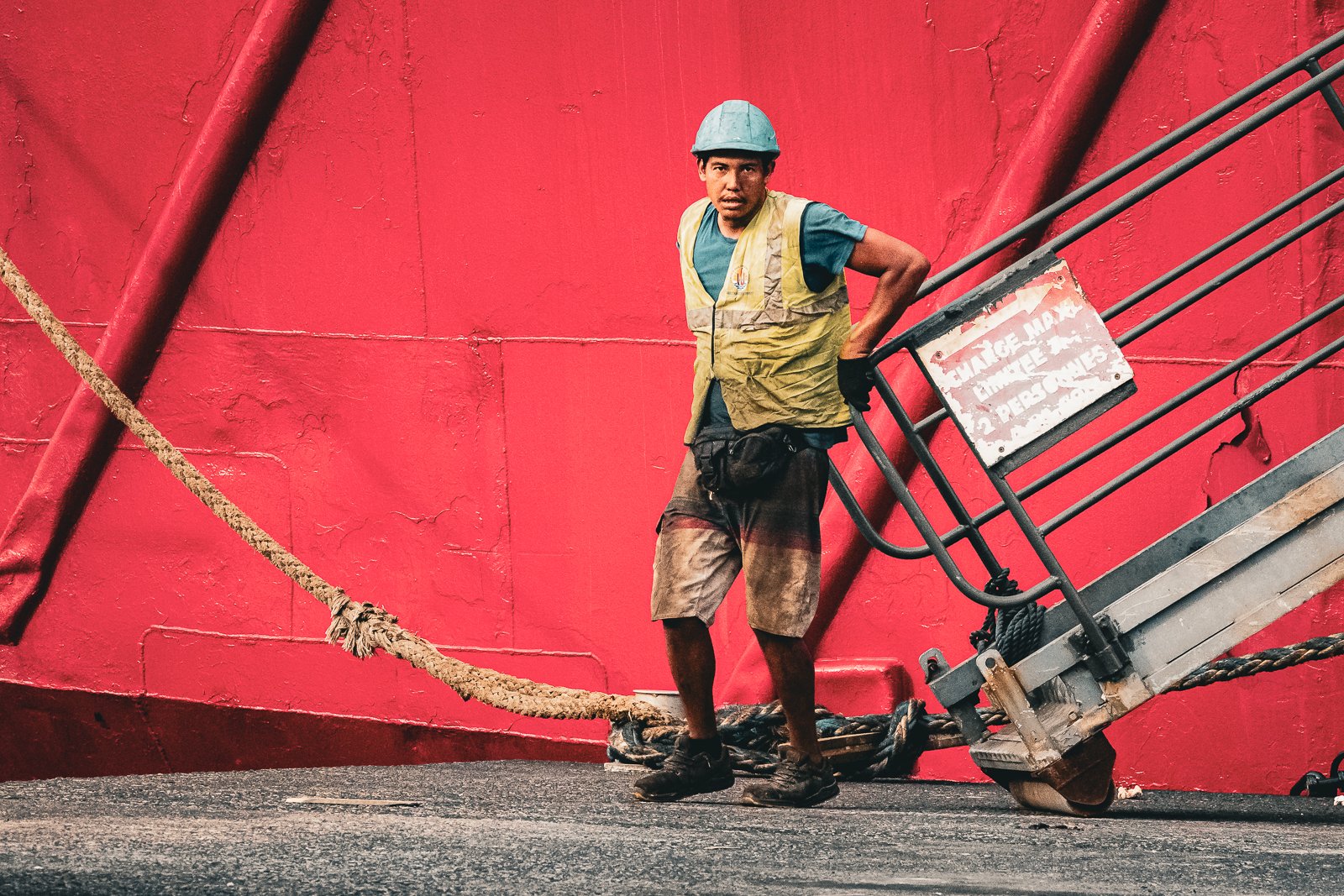
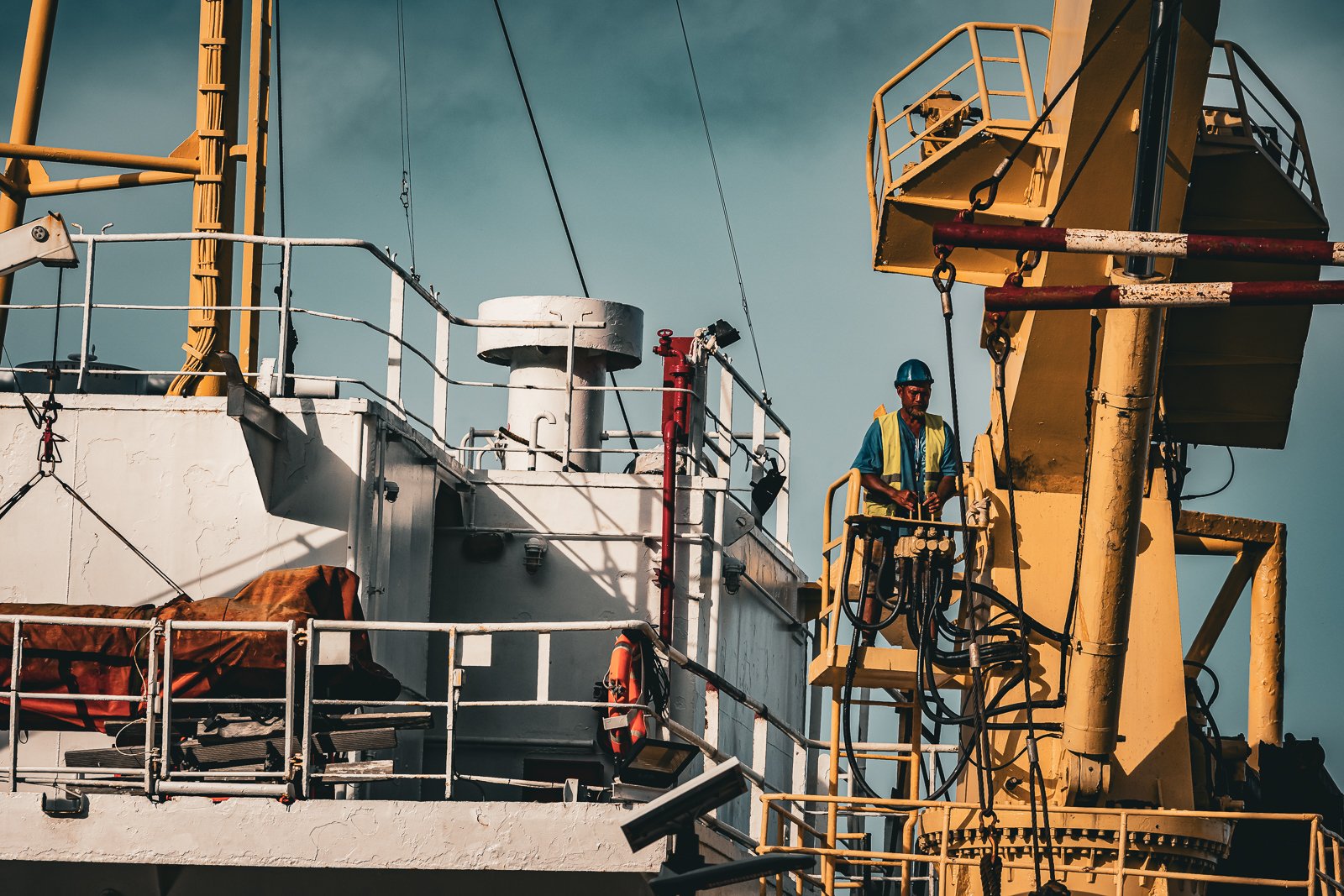
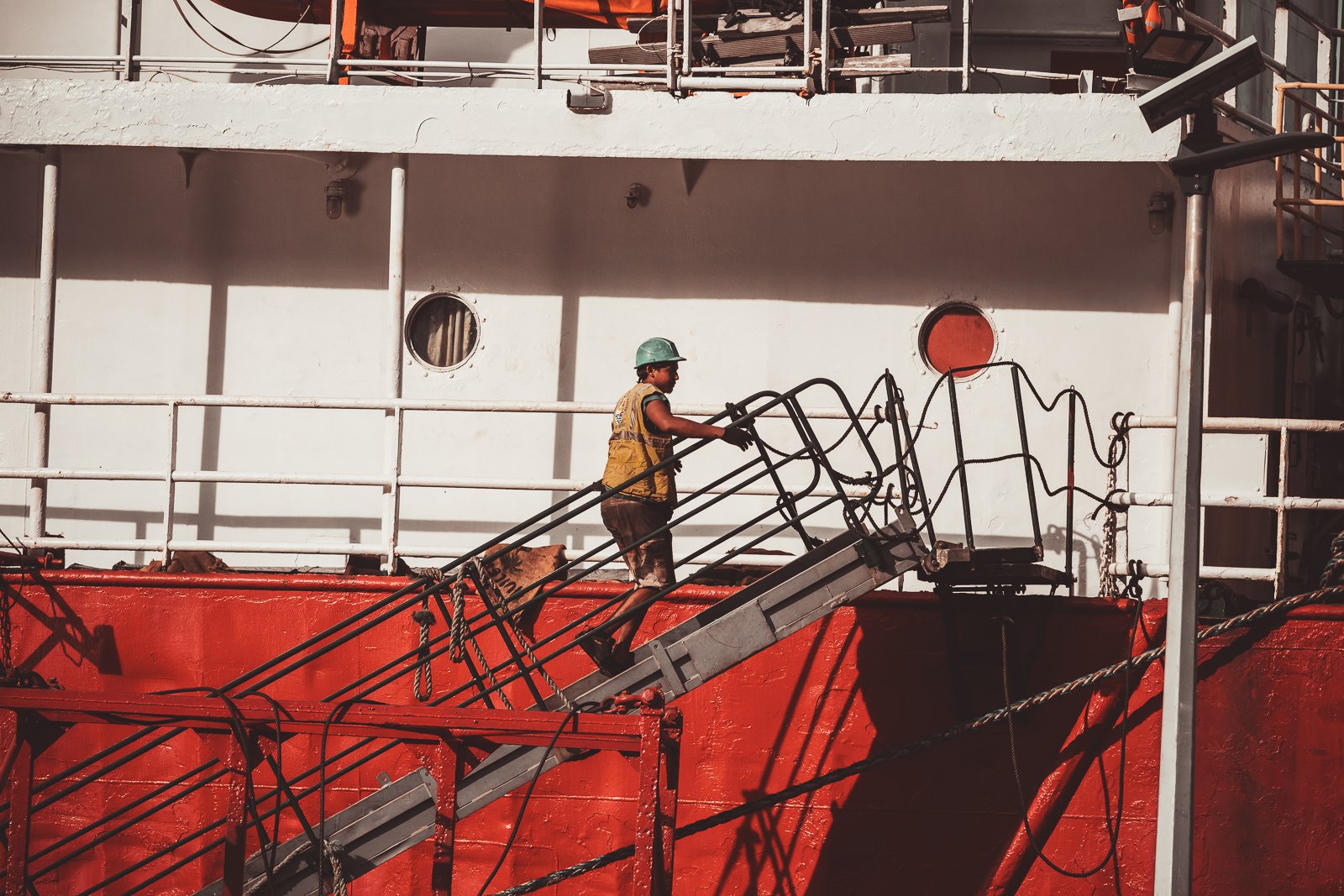
Left: A deck-hand resting against the hull. Right, top: The crane operator at his controls. Right, bottom: On the gangway.
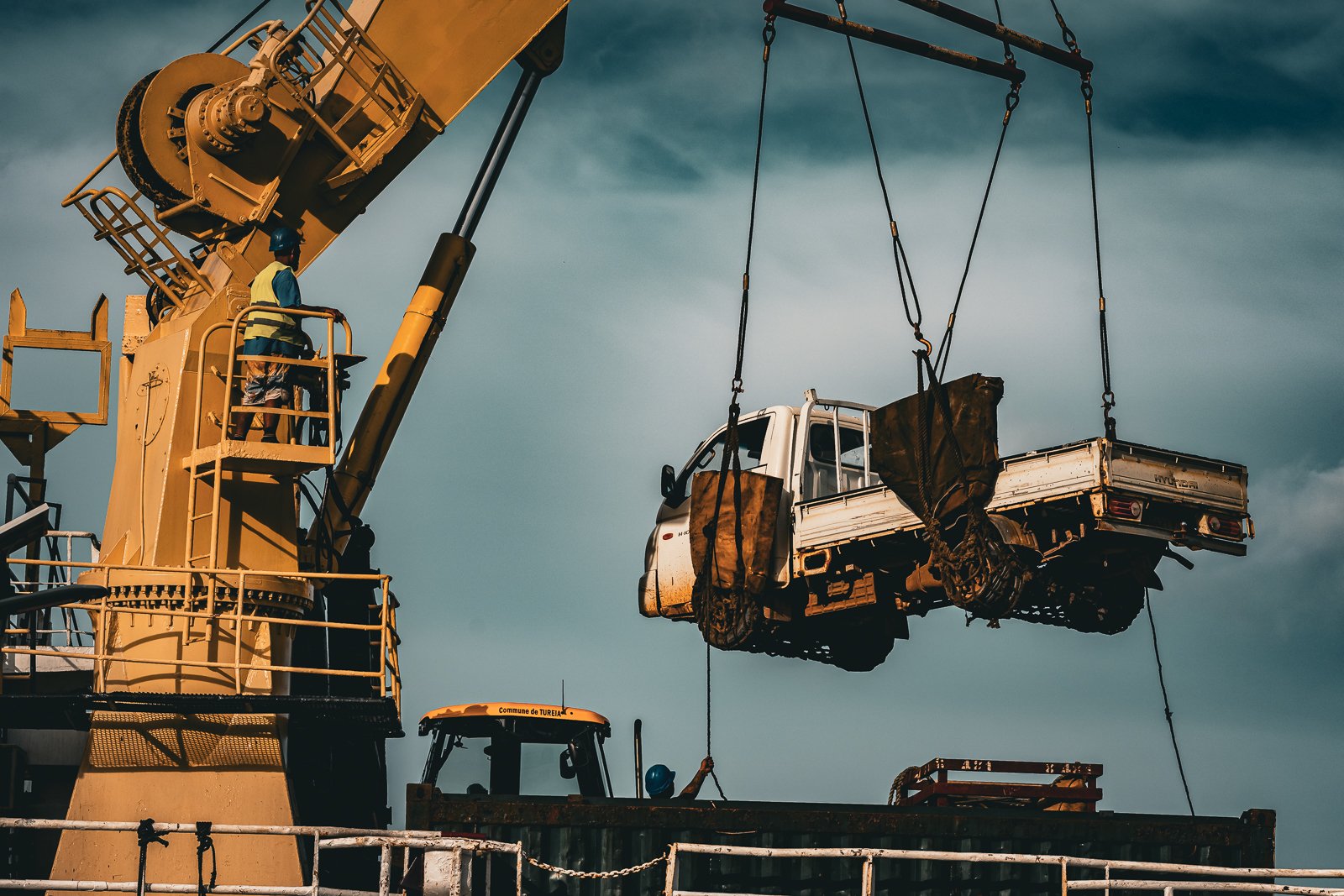
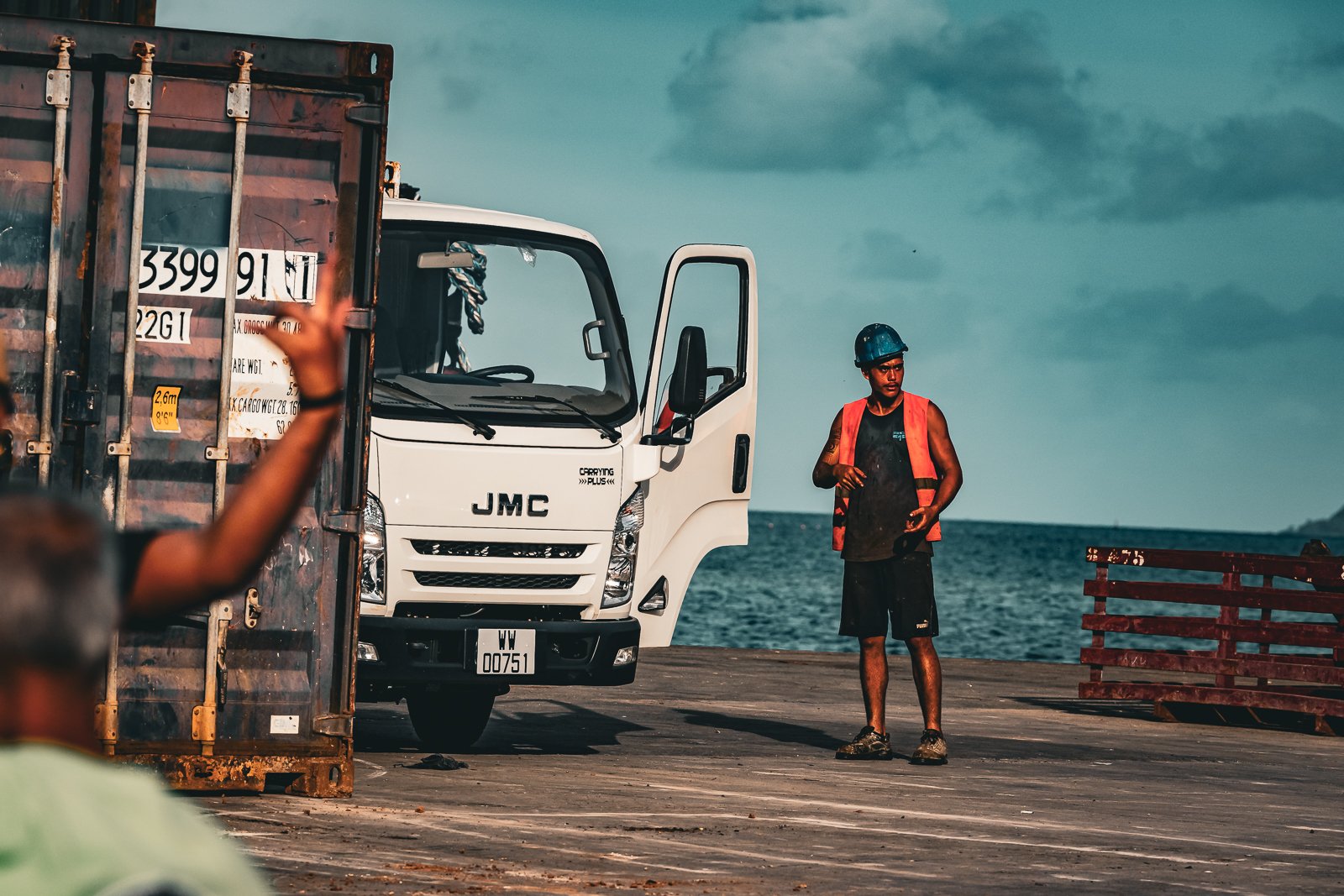
Left: A pickup leaving the deck. Right, top: A driver waiting to be waved in. Right, bottom: The operator easing a load down.
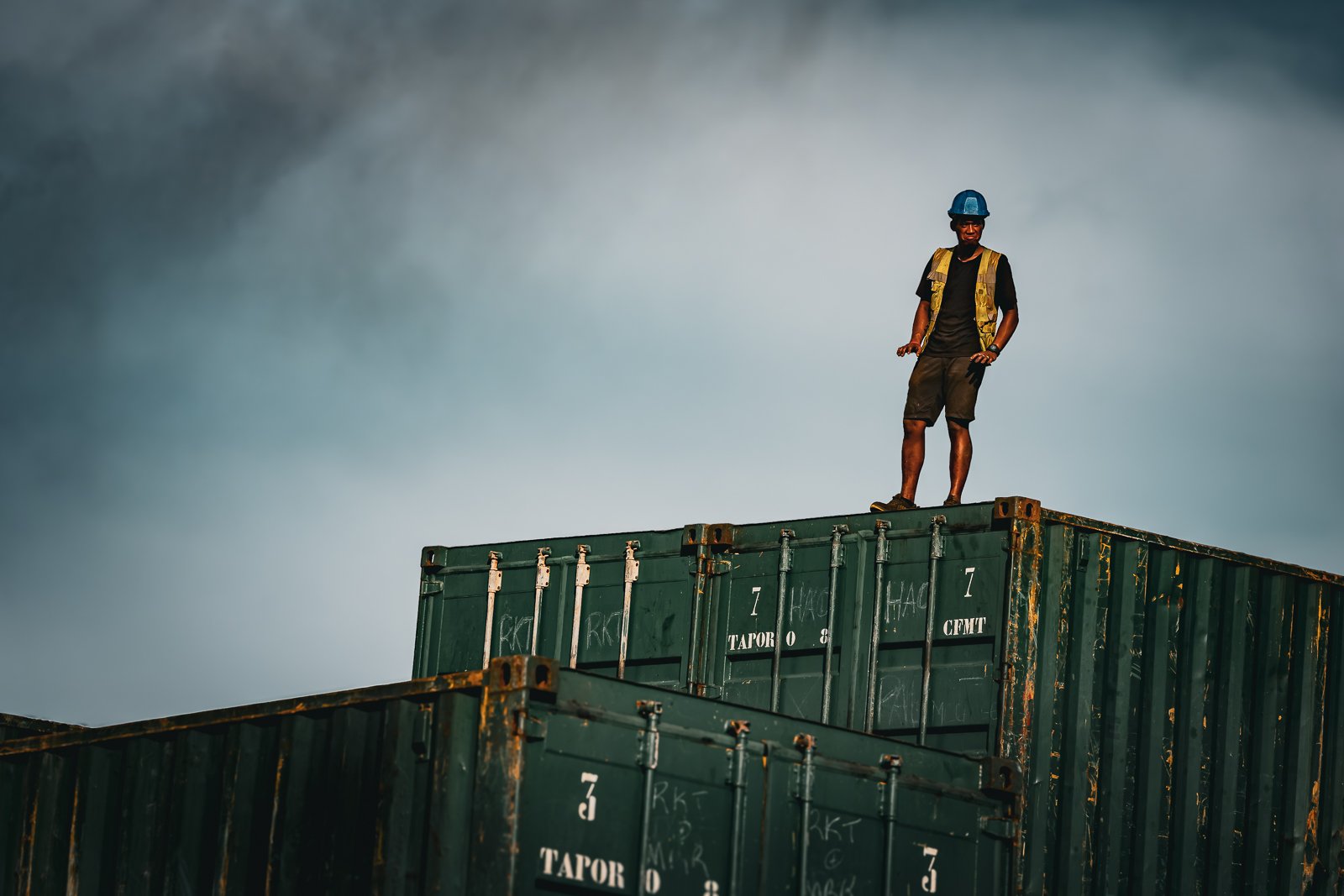
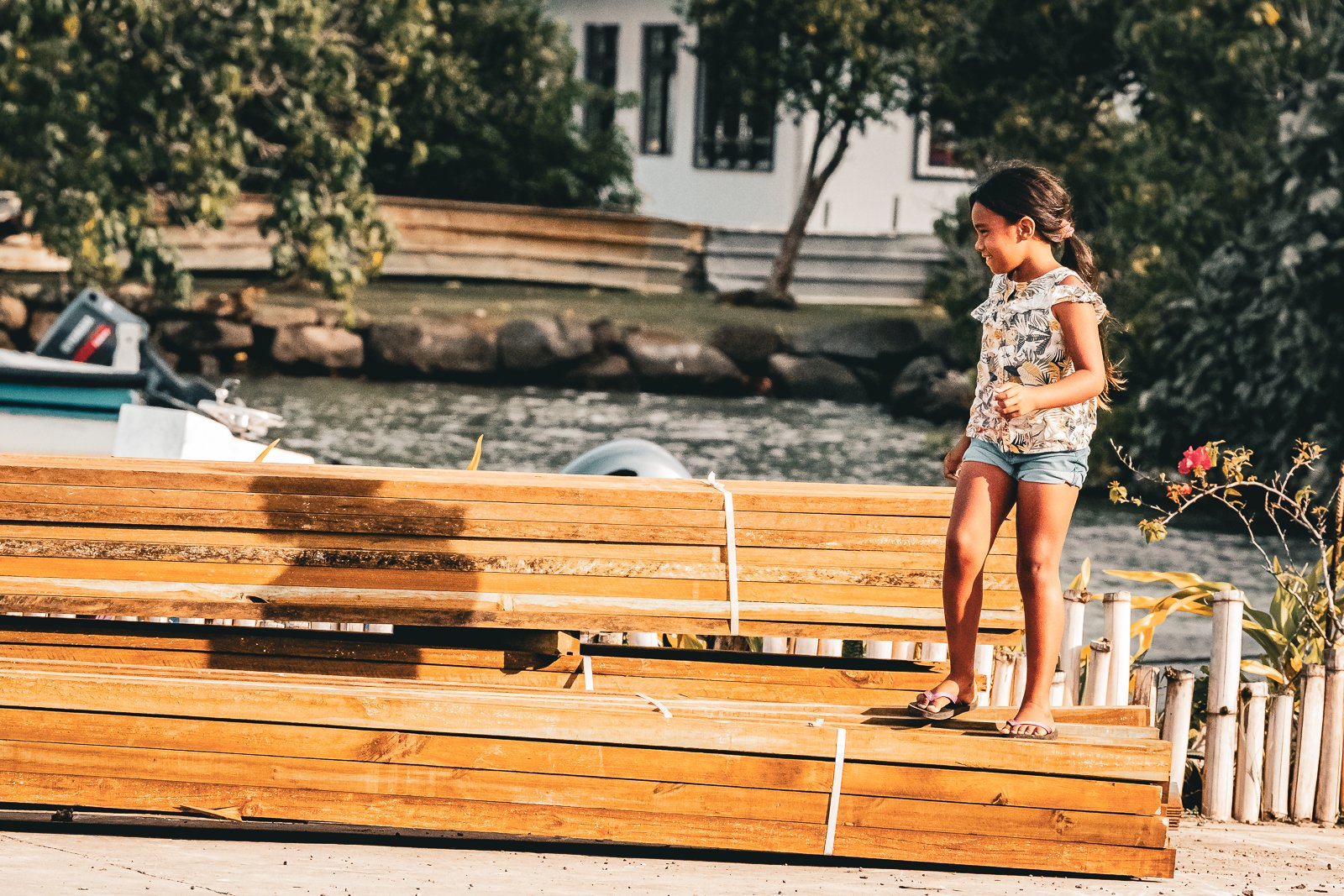
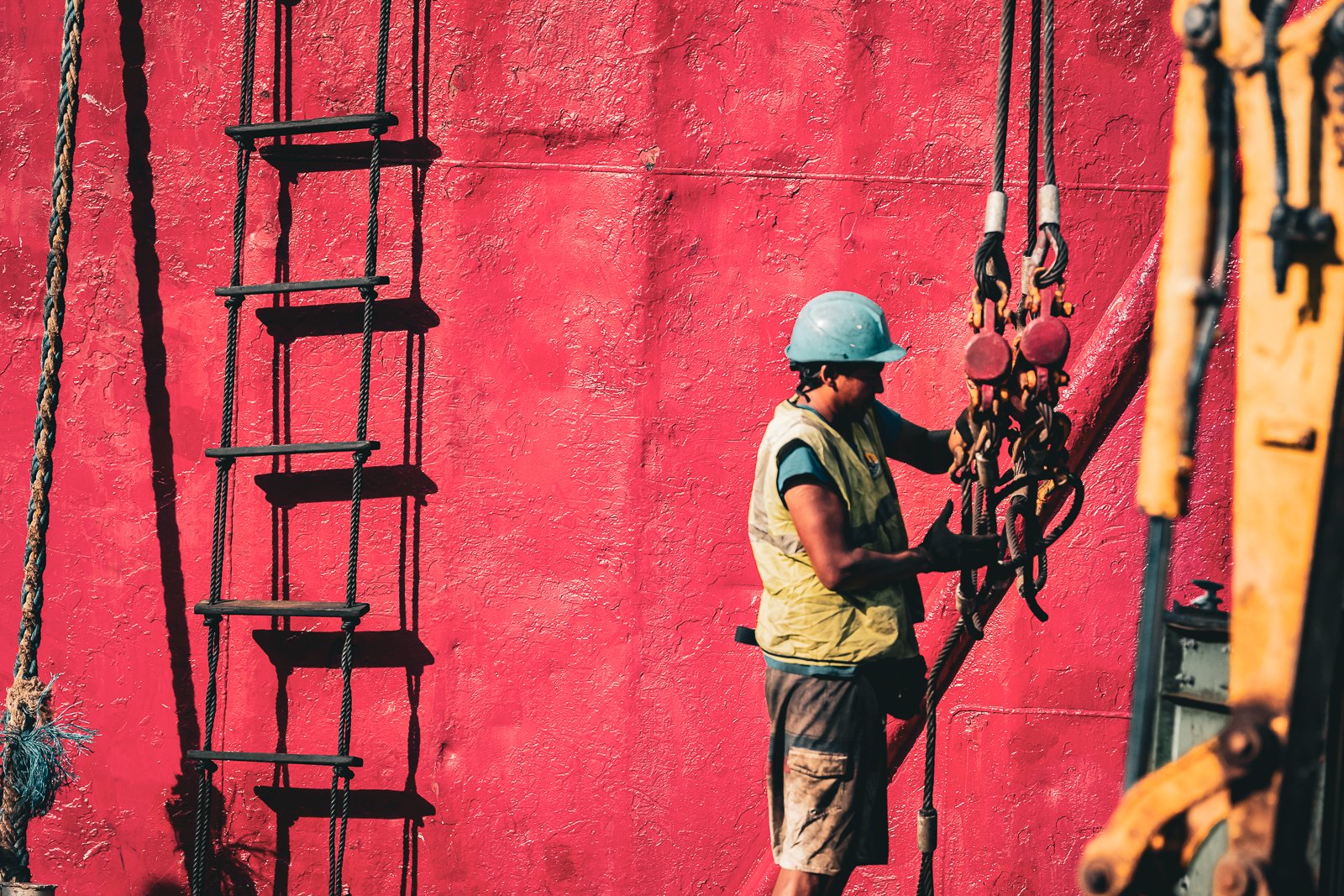
Left: Watch over the containers. Right, top: A child on the lumber drop. Right, bottom: Hooks in hand.
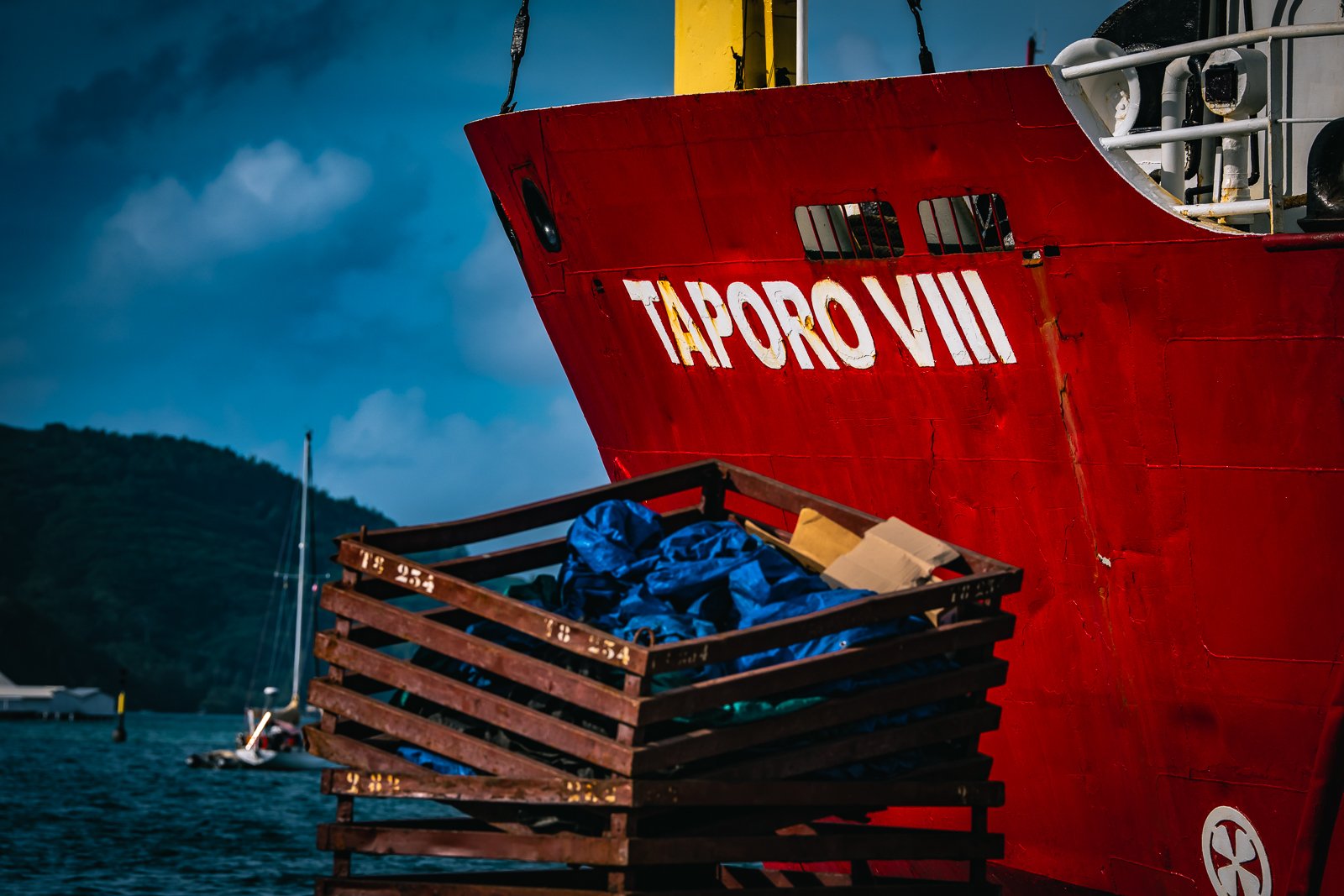
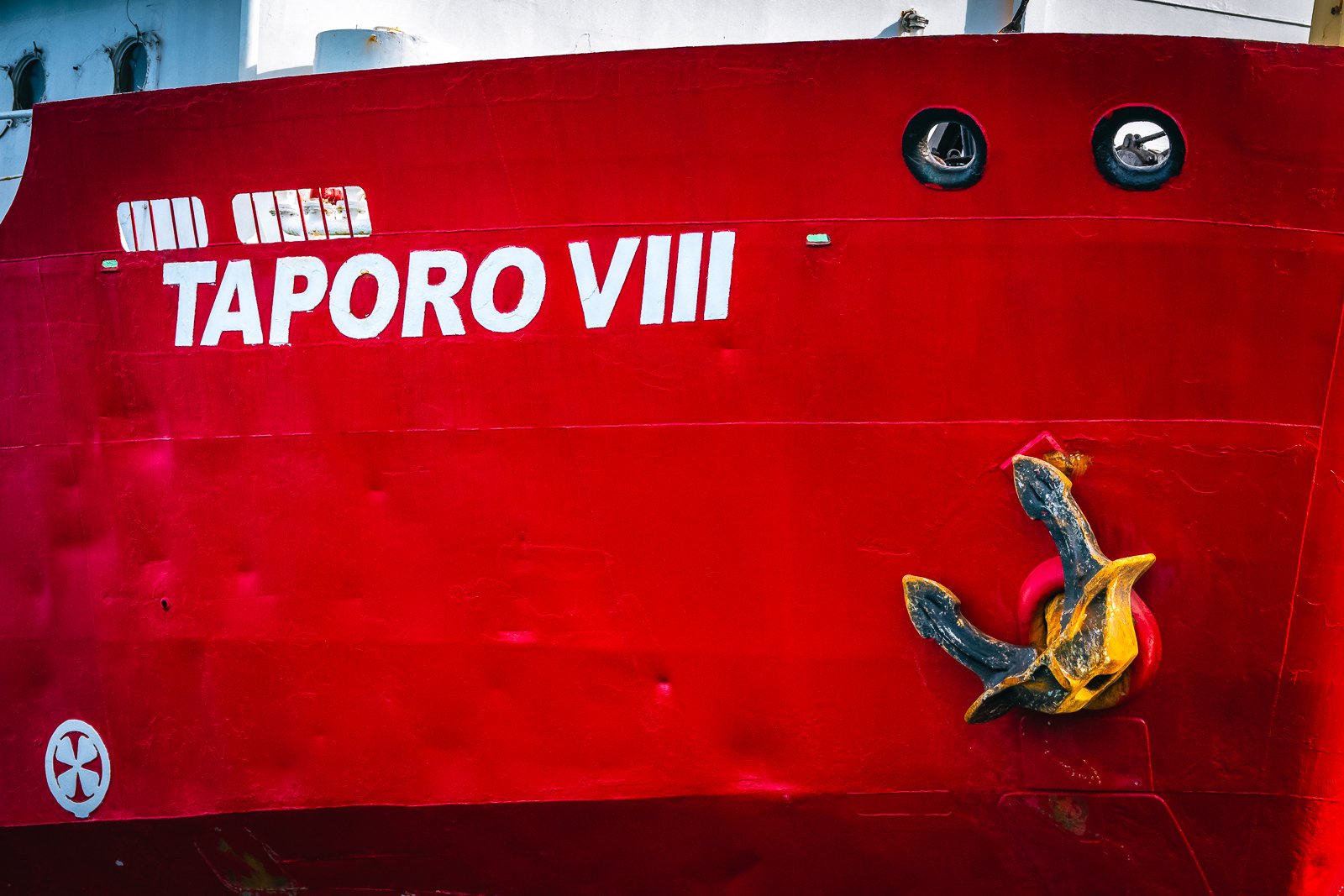
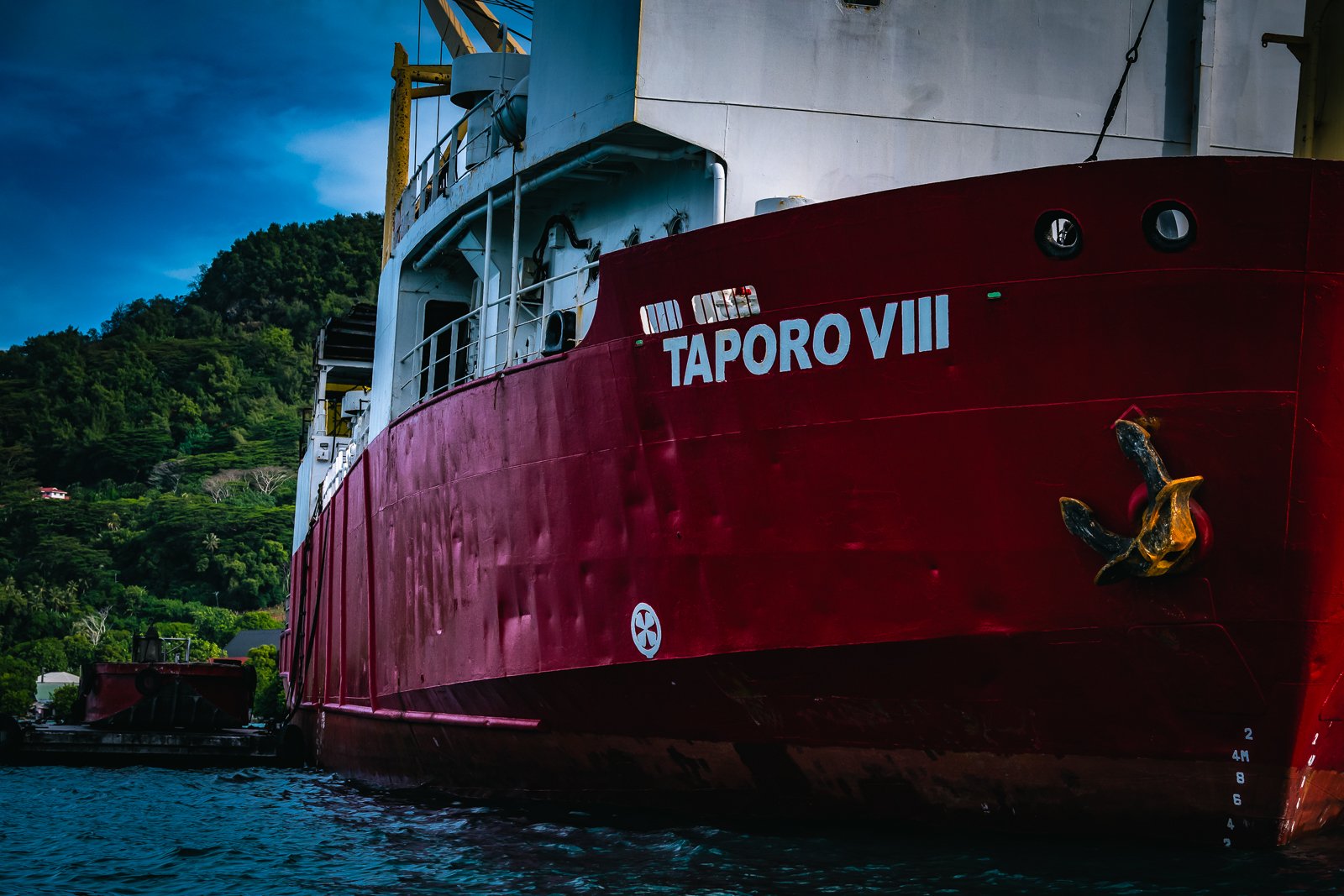
Left: The bow and a cargo crate. Right, top: Name and anchor. Right, bottom: Looking up the bow.